Hand Crank Emergency Radio (AM/FM, Dynamo)
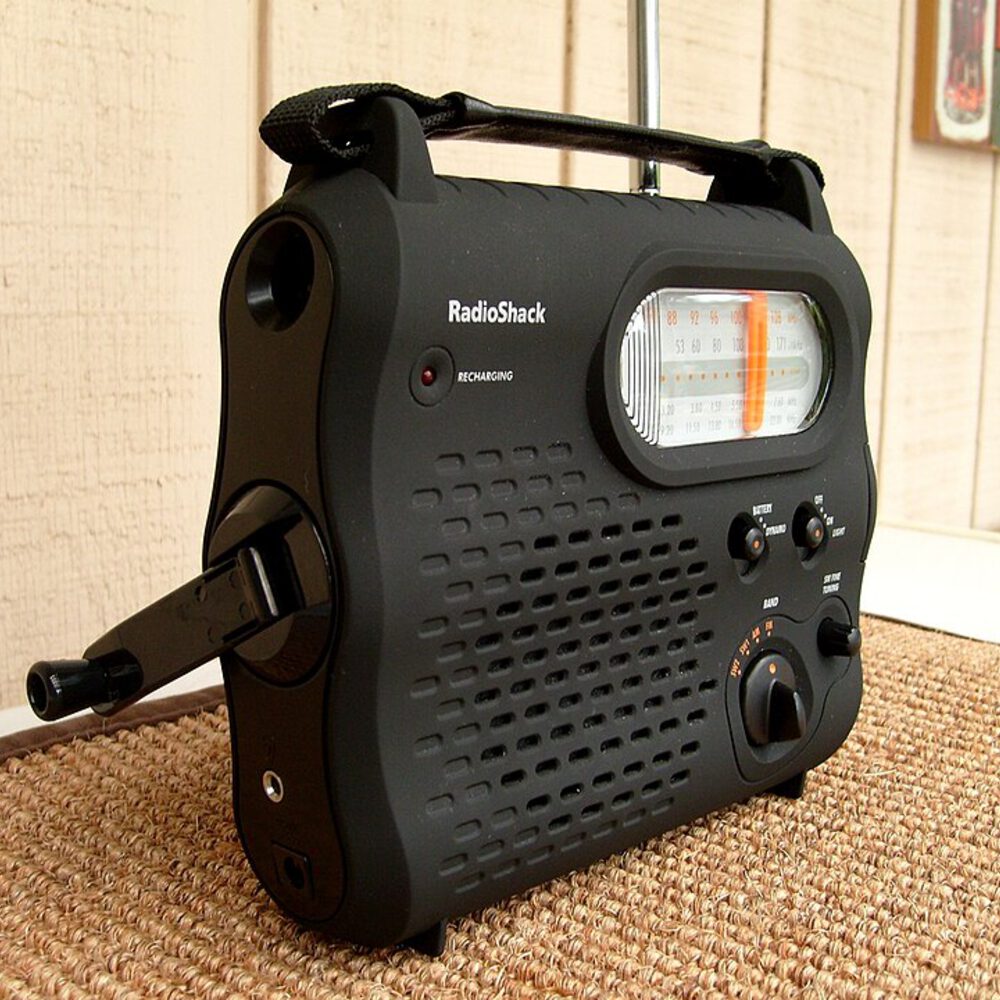
AM/FM emergency radio with a fold-out hand crank that charges its built-in battery, so you can hear cyclone and flood bulletins when there is no electricity or mobile network.
| Option | Price | Availability | SKU |
|---|---|---|---|
| Single unit | ৳2,200 | In stock | FSB-HV-RADIO-SINGLE-UNIT |
Delivery across Bangladesh. Cash on delivery available.
Delivery:
- Inside Dhaka: ৳60, about 2 days
- Outside Dhaka: ৳120, about 5 days
Payment methods: Cash on delivery, bKash, Credit / debit card, Cards, mobile banking and internet banking (SSLCommerz)
Specifications
- Product code
- FSB-HV-RADIO
- Type
- Emergency radio
- Bands
- AM and FM
- Tuning
- Analogue dial
- Charging
- Built-in hand crank dynamo
- Battery
- Built-in rechargeable battery
- Aerial
- Telescopic (FM), internal ferrite (AM)
- Cabinet
- Black plastic with top carry handle
- Controls
- Tuning knob, volume knob, band switch
- Audio
- Built-in front speaker
- Color
- Black
- Application
- Marine, Home, Disaster Preparedness
Description
A hand crank emergency radio is a portable AM/FM receiver with a small dynamo inside: turning the fold-out handle charges its built-in rechargeable battery, so the radio never depends on mains power or fresh batteries. It is made for disasters, when the electricity is off for days and mobile towers are down but radio stations keep broadcasting weather signals and relief information.
Why is it useful in Bangladesh?
- Cyclones and storm surges — danger signal numbers and evacuation notices are broadcast by radio and reach the coast even when the network fails.
- Floods — in char and haor areas power can be out for a long time.
- Earthquake preparedness — a radio is a standard item in a family emergency bag.
- Fishing boats and trawlers — weather bulletins at sea.
How does the crank work?
Unfold the handle on the side and turn it steadily, about two turns a second. A minute or so of cranking typically gives several minutes of listening at moderate volume; the exact time depends on the volume and the condition of the battery. Because the energy goes into a rechargeable battery, you can crank in advance and listen later.
Features of this radio
- AM and FM bands with a large analogue tuning dial
- Telescopic aerial for FM; internal aerial for AM
- Built-in speaker and volume knob
- Fold-out dynamo crank and charging indicator light
- Carry handle on top
- Black, sturdy plastic cabinet
Many radios of this type can also be charged from an external power adapter, and some can pass crank power to a phone through a charging socket — enough for a short emergency call rather than a full charge.
How should you look after it?
A rechargeable battery that sits empty for years loses capacity. Crank the radio, or charge it, for a few minutes every two to three months, and store it somewhere dry. Keep it with your torch, whistle and first aid kit so that the whole emergency kit can be picked up at once.
Applications
- Family cyclone and flood emergency kits
- Coastal, char and haor households
- Earthquake preparedness bags
- Fishing boats and trawlers
- Cyclone shelters, NGOs and relief teams
- Camping and remote site work
Recommended usage
Store the radio with your emergency kit and top up its battery with the crank or charger every two to three months. In an emergency, extend the aerial fully for FM and turn the whole radio to improve AM reception. Crank steadily rather than fast.
Safety instructions
Turn the crank at a steady pace — forcing it very fast can damage the gears. Keep the radio dry and away from salt spray; wipe it down after use on a boat. Do not extend the aerial near overhead power lines or use it outdoors during lightning.
Frequently asked questions
How does a hand crank radio work without batteries?
Turning the crank spins a small generator (dynamo) that charges a rechargeable battery inside the radio. The radio then runs from that stored charge, so you never need to buy batteries or find a power socket.
How long do I have to crank an emergency radio?
About one minute of steady cranking usually gives several minutes of listening at moderate volume. The figure varies with volume and battery condition, so it is best to crank for a few minutes before a bulletin is due.
Why keep a radio for cyclones when I have a mobile phone?
A radio keeps working when mobile towers lose power or are damaged, which is common during a severe cyclone. Signal numbers and evacuation notices are broadcast on AM and FM, and a crank radio can receive them for as long as someone can turn the handle.
Can a hand crank radio charge a mobile phone?
Some models can, but only a little. Crank power is small, so several minutes of turning gives enough for a short call or message rather than a full charge; check that the unit has a phone-charging socket before relying on it.