Emergency Whistle — Orange Pealess with Lanyard Clip
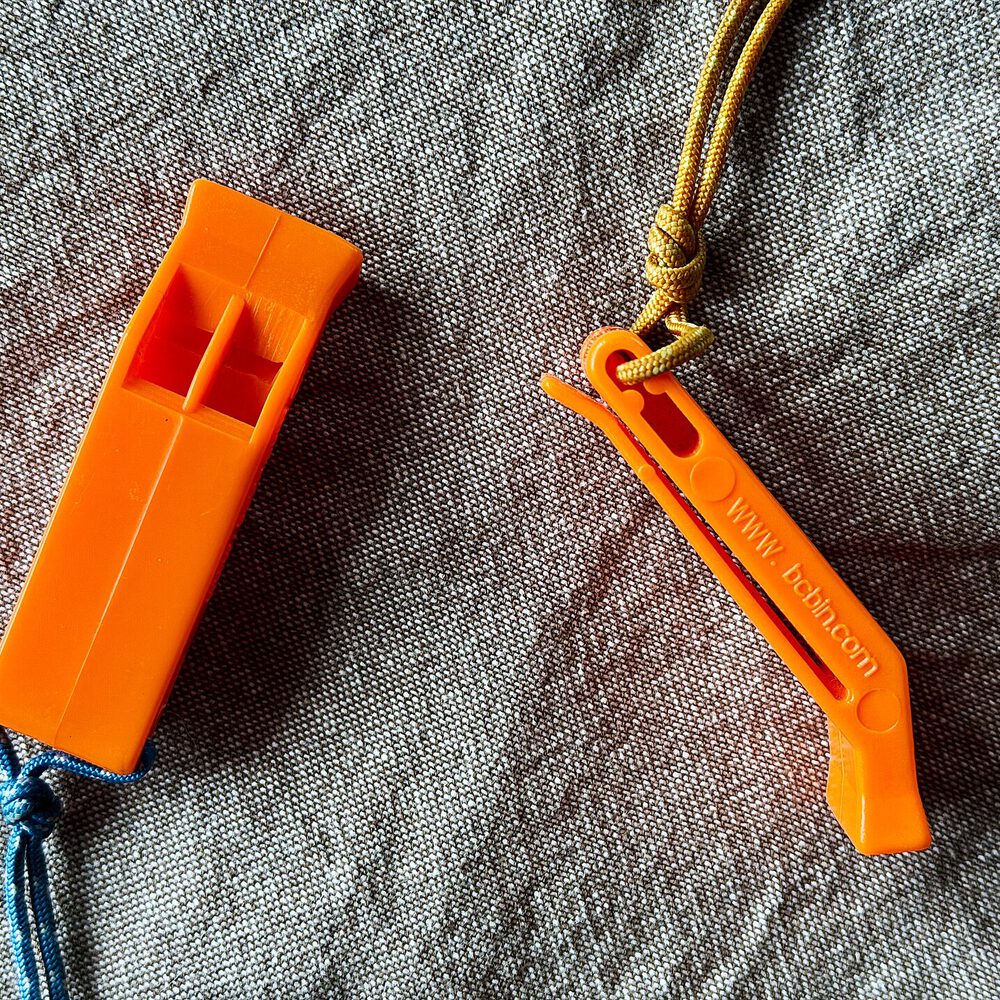
Flat orange pealess distress whistle in tough plastic with a lanyard clip. Works when wet, floats, and is far louder than shouting — for earthquake kits, boats and children.
| Option | Price | Availability | SKU |
|---|---|---|---|
| 1 piece | ৳120 | In stock | FSB-HV-WHISTLE-1-PIECE |
| Pack of 5 | ৳520 | In stock | FSB-HV-WHISTLE-PACK-OF-5 |
| Pack of 10 | ৳950 | In stock | FSB-HV-WHISTLE-PACK-OF-10 |
Delivery across Bangladesh. Cash on delivery available.
Delivery:
- Inside Dhaka: ৳60, about 2 days
- Outside Dhaka: ৳120, about 5 days
Payment methods: Cash on delivery, bKash, Credit / debit card, Cards, mobile banking and internet banking (SSLCommerz)
Specifications
- Product code
- FSB-HV-WHISTLE
- Type
- Emergency whistle
- Type
- Pealess (no ball) distress whistle
- Colour
- High-visibility orange
- Material
- Moulded plastic
- Shape
- Flat, twin-chamber
- Attachment
- Clip with cord hole for lanyard or key ring
- Sound level
- Typically over 100 dB measured close to the whistle
- Water
- Works when wet; floats
- Color
- Orange
- Pack Size
- 5 pieces, 10 pieces, 1 piece
Description
An emergency whistle is a flat, brightly coloured whistle with no ball (pea) inside, designed to make a piercing sound that carries much further than a human voice. It lets a person who is trapped, lost, injured or in the water call for help for hours without tiring, and it weighs almost nothing.
Why a pealess whistle?
Ordinary whistles have a small ball that can stick when wet, dirty or frozen. A pealess whistle has no moving parts: the sound comes from the shape of its chambers, so it works after being under water, in rain and when full of dust. This one is moulded from tough plastic in high-visibility orange, floats, and has a clip so it can hang from a lanyard, a life jacket, a school bag or a key ring.
When would you need one?
- Earthquake or building collapse — a trapped person can whistle long after they are too weak or dusty-throated to shout, and rescuers listen for exactly that.
- Boats, launches and trawlers — to signal from the water at night.
- Floods and cyclones — calling for a rescue boat from a roof.
- Children and women's personal safety — to attract attention quickly.
- Trekking and hill travel — to stay in contact when out of sight.
- Factory and site emergency kits — for fire wardens and evacuation drills.
What signal should you blow?
Three loud blasts, a pause, then three more — a group of three is widely understood as a distress signal. A single blast in reply means "heard you". Teach every family member the same signal.
How loud is it?
Emergency whistles of this type are typically rated at over 100 decibels measured close to the whistle, and they can be heard at several hundred metres in open country. Shouting is much quieter and cannot be kept up for long.
How should you keep it?
A whistle only helps if it is on you. Keep one on the house keys, one clipped inside each emergency bag, and one on every life jacket. Rinse it in clean water after use at sea.
Applications
- Earthquake and family emergency kits
- Life jackets on boats, launches and trawlers
- Flood and cyclone rescue signalling
- Children's school bags and personal safety
- Trekking, camping and hill travel
- Fire warden and evacuation drill kits
Recommended usage
Clip the whistle to something you always carry — keys, a bag strap or a life jacket. In an emergency blow three long blasts, pause and repeat. Blow hard and steadily; a pealess whistle needs a firm breath to reach full volume.
Safety instructions
Do not blow the whistle close to anyone's ear — the sound is loud enough to damage hearing at short range. Keep lanyards off small children's necks during play to avoid a strangulation risk; clip the whistle to a bag instead. Use it for real emergencies so that people take the signal seriously.
Frequently asked questions
Why should I keep a whistle in an earthquake kit?
A whistle lets a trapped person signal rescuers for hours with very little effort. Shouting quickly exhausts you and fills your lungs with dust, while a whistle is louder, carries through rubble better and needs only a breath.
What is a pealess whistle?
A pealess whistle is a whistle with no ball inside. Because nothing moves, it cannot jam when it is wet, muddy or dusty, which is why it is the type used for life jackets, rescue and survival kits.
What is the whistle signal for help?
Three blasts in a row, repeated after a pause, is the widely recognised call for help. Anyone who hears it should answer with one blast and move towards the sound or alert rescuers.
Does an emergency whistle work when wet?
Yes, a pealess emergency whistle works when wet and even straight after being under water — just blow the water out. This one also floats, so it is not lost if dropped overboard.