KN95 Face Mask (Fold-Flat, Ear Loop)
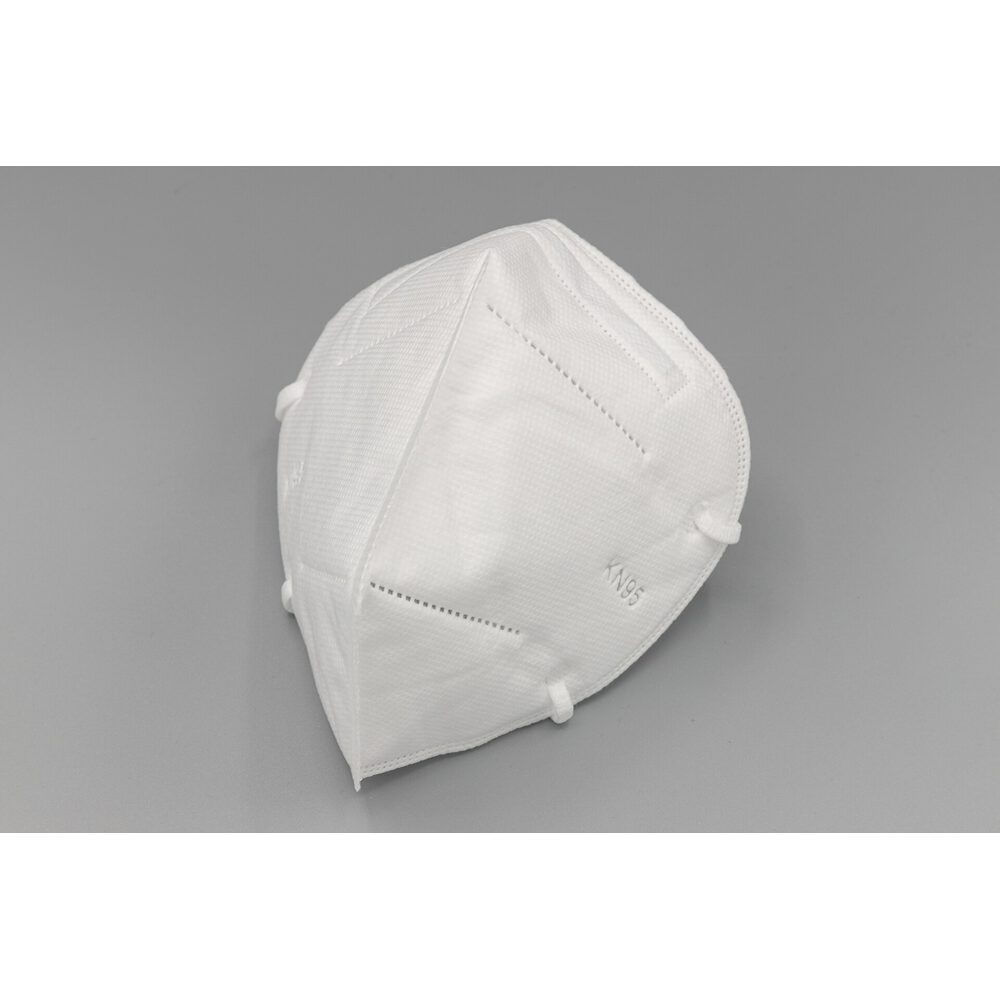
White fold-flat KN95-style particulate mask with ear loops and a built-in nose wire, for fine dust, smog and crowded places. Packs of 10 and boxes of 50.
| Option | Price | Availability | SKU |
|---|---|---|---|
| Pack of 10 | ৳180 | In stock | FSB-PB-KN95-PACK-OF-10 |
| Box of 50 | ৳800 | In stock | FSB-PB-KN95-BOX-OF-50 |
Delivery across Bangladesh. Cash on delivery available.
Delivery:
- Inside Dhaka: ৳60, about 2 days
- Outside Dhaka: ৳120, about 5 days
Payment methods: Cash on delivery, bKash, Credit / debit card, Cards, mobile banking and internet banking (SSLCommerz)
Specifications
- Product code
- FSB-PB-KN95
- Type
- Particulate respirator mask
- Type
- Fold-flat filtering half mask, KN95 style
- Colour
- White
- Layers
- Multi-layer non-woven with melt-blown filter layer
- Fastening
- Elastic ear loops
- Nose seal
- Built-in adjustable nose wire
- Exhalation valve
- None
- Protects against
- Airborne particles — dust, smoke, mist; not gases or vapours
- Reusable
- Limited — replace when damp, dirty or damaged; not washable
- Pack Size
- 10 pcs, 50 pcs
- Color
- White
Description
A KN95 mask is a fold-flat filtering facepiece: several layers of non-woven fabric with an electrostatic melt-blown filter layer in the middle, shaped to seal around the nose and mouth. Unlike a surgical mask or a simple dust mask, it is designed to filter fine airborne particles and to fit closely to the face. This is the white, vertical-fold style with ear loops that most people in Bangladesh know as the "KN95 mask".
What do KN95, N95 and FFP2 mean?
They are three national classes for much the same level of particle filtration:
| Marking | Standard | Minimum filtration of test particles | Usual fastening |
|---|---|---|---|
| KN95 | GB 2626 (China) | 95% | Ear loops |
| N95 | NIOSH 42 CFR 84 (USA) | 95% | Two head straps |
| FFP2 | EN 149 (Europe) | 94% | Ear loops or head straps |
This listing is a KN95-style mask sold as an economy product; we make no filtration claim for it. If your work requires a particular class — for example in a hospital, or for a compliance audit — check the standard and class printed on the mask and its box before use.
What is it used for?
- Fine dust: cement, sanding, grinding, cotton and jute dust
- Road dust, traffic smoke and winter smog in Dhaka and other cities
- Crowded indoor places, travel and clinics
- Brick fields, sweeping and demolition work
It does not protect against gases, solvent or paint vapours, or lack of oxygen.
How do you wear a KN95 mask properly?
- Open the mask and place it over the nose and chin with the nose wire at the top.
- Hook the loops behind both ears.
- Press the nose wire down with two fingers of each hand so it follows the bridge of the nose.
- Cover the mask with both hands and breathe out: if you feel air escaping at the edges or towards the eyes, adjust it again.
A beard, a loose loop or a gap at the nose lets unfiltered air in, whatever the filter class.
How long can you use one?
Replace the mask when it is damp, dirty, damaged, or harder to breathe through, and after a day of work in heavy dust. Do not wash it or spray it with alcohol — liquid destroys the electrostatic charge that makes the filter layer work.
Applications
- Cement, sanding, grinding and demolition dust
- Cotton, jute and textile dust in mills
- Road dust, traffic smoke and seasonal smog
- Clinics, public transport and crowded indoor places
- Brick fields, sweeping and waste handling
Recommended usage
Wear over nose and chin with the nose wire shaped firmly to the face and both loops in place, then check for leaks by breathing out with your hands over the mask. Replace when damp, dirty, damaged or hard to breathe through.
Safety instructions
Not for gases, vapours, paint spray, oxygen-deficient or confined spaces, or firefighting. Facial hair prevents a proper seal. Do not wash or disinfect with liquids. Not designed for children. Leave the area if you feel dizzy or have difficulty breathing. Check the class marked on the mask if a specific rating is required.
Frequently asked questions
What is the difference between KN95 and N95 masks?
KN95 and N95 masks are built to filter at least 95% of test particles, but under different standards: KN95 follows the Chinese GB 2626 standard and N95 the American NIOSH standard. In practice KN95 masks usually have ear loops while N95 masks have two head straps, which generally give a tighter seal.
Can a KN95 mask be washed and reused?
No, a KN95 mask should not be washed. Water, soap and alcohol remove the electrostatic charge from the filter layer and reduce its filtration. You can wear the same mask again while it stays dry, clean and well-fitting, but replace it once it is dirty, damp or deformed.
Is a KN95 mask good for Dhaka air pollution?
Yes, a well-fitted KN95-type mask is a sensible choice for road dust and smog, because the harmful part of air pollution is fine particles that cloth and surgical masks let through at the edges. The fit matters as much as the filter, so press the nose wire down and check for leaks.
Does a KN95 mask protect against chemical fumes or paint smell?
No, a KN95 mask filters particles only and does nothing against gases and vapours. For solvents, paint, ammonia, chlorine or similar chemicals you need a half-face or full-face respirator with the right gas cartridge.