Half Face Respirator with Twin Cartridges
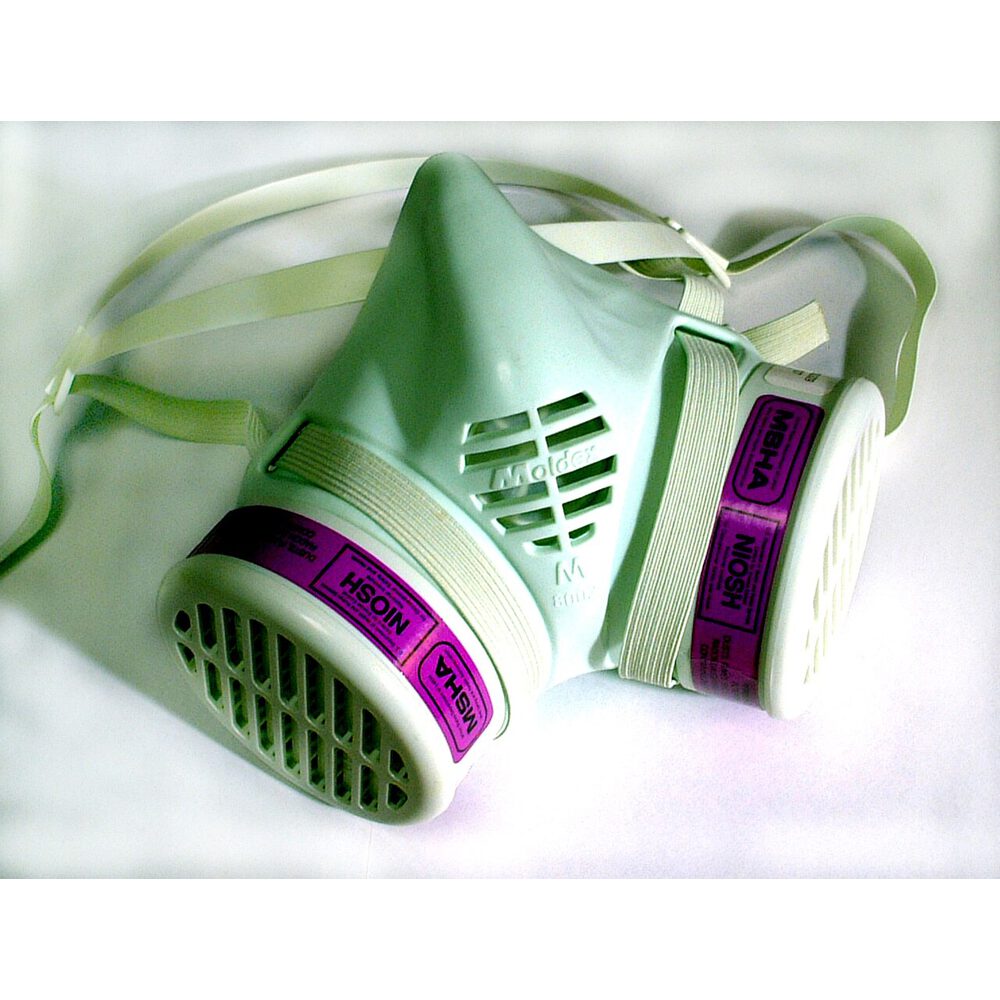
Reusable half-face respirator with a soft facepiece, adjustable head straps and two replaceable filter cartridges, for paint spraying, chemical handling and heavy dust.
| Option | Price | Availability | SKU |
|---|---|---|---|
| Spare organic vapour cartridges (pair) | ৳550 | In stock | FSB-PB-RESP-HALF-SPARE-ORGANIC-VAPOUR-CARTRIDGES-PAIR |
| Mask with 2 particulate filters | ৳1,100 | In stock | FSB-PB-RESP-HALF-MASK-WITH-2-PARTICULATE-FILTERS |
| Mask with 2 organic vapour cartridges | ৳1,350 | In stock | FSB-PB-RESP-HALF-MASK-WITH-2-ORGANIC-VAPOUR-CARTRIDGES |
Delivery across Bangladesh. Cash on delivery available.
Delivery:
- Inside Dhaka: ৳60, about 2 days
- Outside Dhaka: ৳120, about 5 days
Payment methods: Cash on delivery, bKash, Credit / debit card, Cards, mobile banking and internet banking (SSLCommerz)
Specifications
- Product code
- FSB-PB-RESP-HALF
- Type
- Reusable respirator
- Type
- Reusable half-face air-purifying respirator, twin cartridge
- Colour
- Light green facepiece (as pictured)
- Facepiece
- Soft thermoplastic rubber or silicone
- Head harness
- Adjustable elastic straps with head cradle and neck strap
- Valves
- Two inhalation valves and one exhalation valve
- Cartridges
- Two replaceable cartridges, one each side
- Options
- Particulate filters or organic vapour cartridges (see variants)
- Eye protection
- None — wear separate goggles
- Cleaning
- Facepiece washable after removing cartridges
- Application
- Painting, Industrial, Chemical Handling
- Model
- With particulate filters, With organic vapour cartridges
Description
A half-face respirator is a reusable rubber-like mask that seals around the nose and mouth and draws air in through two replaceable cartridges, one on each side. Because the cartridges can be chosen for the hazard — dust, organic vapours, acid gases or a combination — one mask can serve for paint spraying, pesticide mixing, chemical handling or heavy dust. The unit shown has a light green facepiece with a pair of particulate filter cartridges.
Which cartridge do you need?
The mask is only as good as the cartridge fitted to it. Match the cartridge to the contaminant named on the chemical's label or safety data sheet:
| Hazard | Cartridge type | European code / colour |
|---|---|---|
| Dust, fume, mist, fibres | Particulate filter | P2 or P3 — white |
| Paint, thinner, solvent, petrol vapours | Organic vapour | A — brown |
| Chlorine, hydrogen sulphide and similar | Inorganic gas | B — grey |
| Sulphur dioxide, acid gases | Acid gas | E — yellow |
| Ammonia | Ammonia | K — green |
| Paint spraying (vapour + mist) | Combined vapour and particulate | e.g. A2P3 |
American-system cartridges use different colours — for example black for organic vapour and magenta for P100 particulate filters.
How do you check the fit?
Do both checks every time you put the mask on:
- Negative pressure: cover the cartridge inlets with your palms and breathe in gently. The facepiece should pull in slightly and stay there.
- Positive pressure: cover the exhalation valve and breathe out gently. The facepiece should bulge a little with no air escaping at the edges.
A beard, stubble or spectacle arms under the seal will cause leaks.
When should cartridges be changed?
- Particulate filters: when breathing becomes noticeably harder, or the filter is damaged or wet.
- Gas and vapour cartridges: immediately if you smell, taste or feel the contaminant, and otherwise on a fixed schedule set for your workplace — do not wait for a smell.
- Keep vapour cartridges in a sealed bag between uses; left open, they keep absorbing from the air and wear out on the shelf.
Limits you must know
This is an air-purifying respirator: it cleans the surrounding air but supplies none. It must not be used in tanks, pits and other confined spaces where oxygen may be low, in unknown or very high concentrations, or for firefighting. It does not protect the eyes — add sealed goggles, or choose a full-face respirator.
Applications
- Spray painting and auto body workshops
- Pesticide mixing and spraying
- Chemical stores, dye houses and washing plants
- Grinding, sanding and heavy dust work
- Fumigation and pest-control work with the correct cartridge
- Laboratory and maintenance tasks with solvents
Recommended usage
Choose cartridges for the specific contaminant, fit both of the same type, and do a positive and negative pressure fit check each time the mask is put on. After use remove the cartridges, wash the facepiece in warm soapy water, dry it and store it in a sealed bag away from the work area.
Safety instructions
Do not use in oxygen-deficient atmospheres, confined spaces, unknown or immediately dangerous concentrations, or for firefighting. A particulate filter alone gives no protection against gases and vapours. Leave the area at once if you smell or taste the contaminant, feel dizzy or find breathing difficult. Not suitable for use with a beard.
Frequently asked questions
Which respirator cartridge is used for spray painting?
Spray painting needs an organic vapour cartridge combined with a particulate pre-filter. The vapour cartridge absorbs the solvent, and the pre-filter catches the paint mist that would otherwise clog it; in the European system this is typically an A1P2 or A2P3 combination.
How long does a respirator cartridge last?
There is no fixed life — it depends on the contaminant, its concentration, humidity and how hard you are breathing. Change gas and vapour cartridges on a set schedule or at the first smell or taste of the chemical, and change particulate filters when breathing becomes harder.
Can a half-face respirator be used inside a tank or septic pit?
No, a cartridge respirator must never be used in a tank, manhole, septic pit or other confined space. These spaces can be short of oxygen or contain gases far above what a cartridge can handle; they require supplied-air breathing apparatus, gas testing and a trained standby person.
Is a half-face respirator better than an N95 mask?
For dust alone, a half-face respirator with particulate filters seals more reliably and costs less over time than disposable masks. Its real advantage is that it can also take gas and vapour cartridges, which no disposable N95 or KN95 mask can do.
How do you clean a reusable respirator?
Remove the cartridges first, then wash the facepiece in warm water with mild soap, rinse and let it air-dry. Never wash or blow out the cartridges, and store the dry mask in a sealed bag so the valves and seal stay clean and undistorted.