CO2 Fire Extinguisher
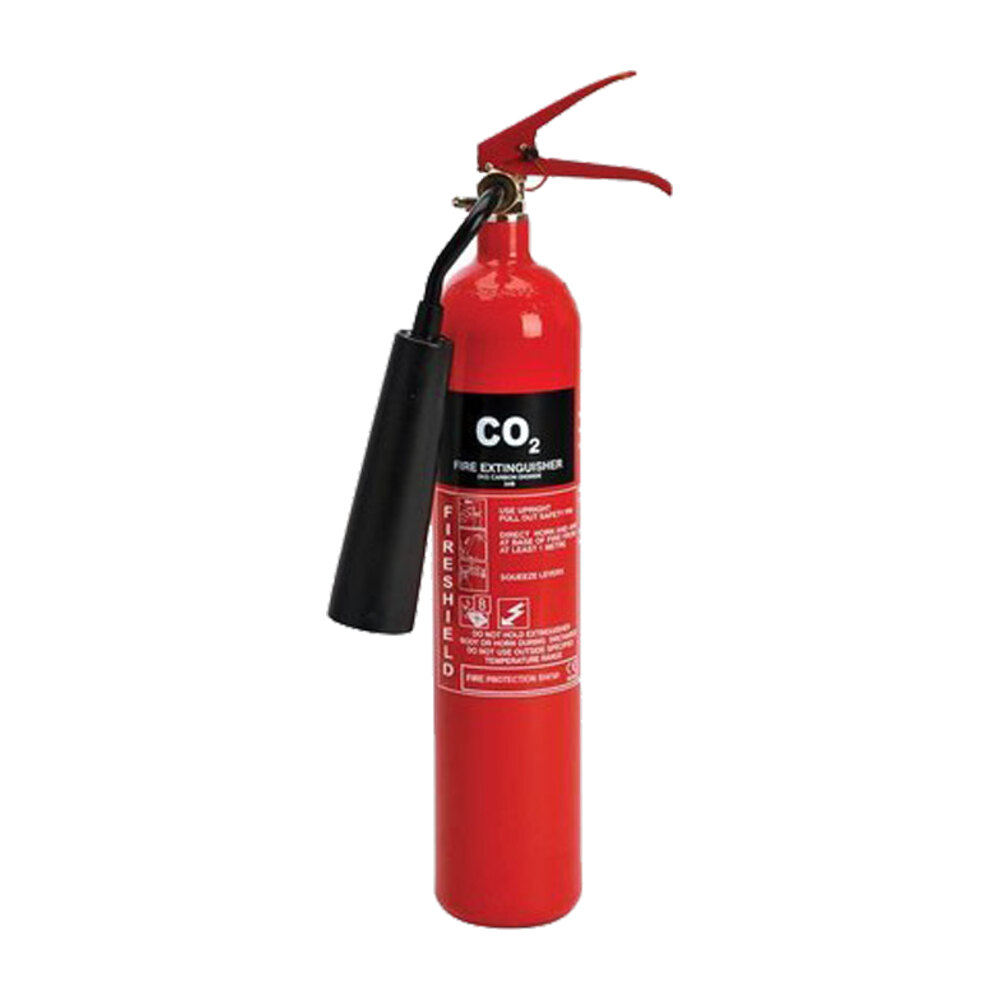
Carbon dioxide (CO2) fire extinguisher in 2 kg, 3 kg and 5 kg sizes for electrical panels, server rooms, generators and flammable-liquid fires. Leaves no residue.
| Option | Price | Availability | SKU |
|---|---|---|---|
| 2 kg | ৳2,700 | In stock | FSB-FE-CO2-2-KG |
| 3 kg | ৳2,900 | In stock | FSB-FE-CO2-3-KG |
| 5 kg | ৳3,600 | In stock | FSB-FE-CO2-5-KG |
Delivery across Bangladesh. Cash on delivery available.
Delivery:
- Inside Dhaka: ৳60, about 2 days
- Outside Dhaka: ৳120, about 5 days
Payment methods: Cash on delivery, bKash, Credit / debit card, Cards, mobile banking and internet banking (SSLCommerz)
Specifications
- Product code
- FSB-FE-CO2
- Type
- Fire extinguisher
- Fire class
- Class B, live electrical
- Extinguishing agent
- Carbon dioxide (CO2), liquefied gas
- Suitable for
- Class B flammable liquids and live electrical equipment
- Not suitable for
- Class A deep-seated fires, cooking oil (Class F/K), burning metals (Class D)
- Available sizes
- 2 kg, 3 kg, 5 kg
- Cylinder
- Seamless high-pressure steel, red finish
- Discharge
- Squeeze-grip valve with non-conductive horn (hose and horn on 5 kg)
- Pressure gauge
- None — charge is verified by weight
- Discharge range
- Approximately 1.5–3 m
- Discharge time
- Approximately 8–20 seconds depending on size
- Operating temperature
- -20 °C to +60 °C
- Refillable
- Yes
- Residue after use
- None
- Application
- Electrical, Office, Industrial
- Capacity
- 3 kg, 2 kg, 5 kg
- Agent Type
- CO2
Description
A CO2 fire extinguisher puts out a fire by releasing carbon dioxide gas, which pushes the oxygen away from the flames and cools the burning surface. Because the gas leaves nothing behind, it is the standard choice in Bangladesh for electrical panels, server rooms, UPS and generator rooms, laboratories and anywhere a powder extinguisher would ruin the equipment.
What is a CO2 fire extinguisher used for?
- Live electrical equipment — distribution boards, switchgear, servers, UPS, control panels and office electronics. Carbon dioxide does not conduct electricity.
- Flammable liquids (Class B) — petrol, diesel, kerosene, solvents, paints and thinners.
It is not the right extinguisher for burning paper, wood or cloth (it does not cool them enough and they can re-ignite), for cooking-oil fires in a kitchen, or for burning metals.
How to recognise one
A CO2 extinguisher has a wide black discharge horn instead of a thin hose nozzle, and it has no pressure gauge — the gas is stored as a liquid under very high pressure, so the charge is checked by weighing the cylinder. The body is a seamless high-pressure steel cylinder painted red.
Which size should you choose?
| Size | Typical use |
|---|---|
| 2 kg | A single electrical panel, a small server rack, a shop counter, a car workshop bench |
| 3 kg | Office floors, IT rooms, laboratories, generator rooms |
| 5 kg | Factory electrical rooms, sub-stations, large server rooms, fuel and paint stores |
Larger cylinders discharge for longer and reach further, but they are heavy — make sure the people who work in the area can lift the size you install.
How to use it
- Pull the safety pin.
- Aim the horn at the base of the fire from about 1–2 metres away.
- Squeeze the lever.
- Sweep from side to side until the flames are out, then watch for re-ignition.
Hold the extinguisher by the handle, never by the horn — the horn becomes cold enough to cause frost burn during discharge.
Maintenance
Check each month that the pin and seal are in place, the horn and hose are undamaged and the cylinder is not corroded. Have the cylinder weighed once a year: a unit that has lost about 10% of its CO2 needs refilling. High-pressure cylinders also need a periodic hydrostatic pressure test, commonly every five to ten years depending on the standard your site follows.
Applications
- Electrical panels, distribution boards and switchgear rooms
- Server rooms, data centres, UPS and battery rooms
- Generator and sub-station rooms
- Laboratories and electronics workshops
- Fuel, paint and solvent stores
- Offices with computers and printing equipment
Recommended usage
Mount on a wall bracket near the electrical or flammable-liquid risk, on the escape route side, with the handle about 1 to 1.5 m above the floor. Pair it with an ABC dry powder or water extinguisher nearby for ordinary combustibles such as paper, wood and cloth.
Safety instructions
Only fight a fire that is small and when your escape route is clear; otherwise leave and call 999. Do not hold the discharge horn while operating — risk of frost burn. Carbon dioxide displaces air: after using it in a small or closed room, leave and ventilate the space before re-entering. Not for cooking-oil fires, burning metals or deep-seated fires in paper, wood or cloth. Keep away from heat above 60 °C and never drop or puncture the cylinder.
Frequently asked questions
Which size of CO2 fire extinguisher do I need for a server room?
A 2 kg unit covers a single rack or a small network cabinet. For a dedicated server or UPS room, a 3 kg or 5 kg unit placed just inside the door is the usual choice, because it discharges for longer and reaches further.
Can a CO2 extinguisher be used on electrical fires?
Yes. Carbon dioxide does not conduct electricity and leaves no residue, so it is the usual choice for live electrical panels, servers, UPS units and other electronic equipment.
What is the difference between a CO2 and an ABC dry powder extinguisher?
ABC dry powder works on solids, liquids, gases and electrical fires but leaves a powder that damages electronics and needs cleaning. CO2 works on flammable liquids and electrical fires only, but leaves nothing behind. Many offices and factories keep both.
Why does a CO2 fire extinguisher have no pressure gauge?
The CO2 inside is a liquid under very high pressure, and that pressure stays almost the same until the cylinder is nearly empty, so a gauge would not show how much is left. The charge is checked by weighing the extinguisher.
How often should a CO2 fire extinguisher be refilled?
Refill it after any use, even a short burst, and whenever the yearly weight check shows it has lost about 10% of its charge. An unused, undamaged cylinder does not need routine refilling just because time has passed.