Triangular Bandage (Non-Woven Arm Sling)
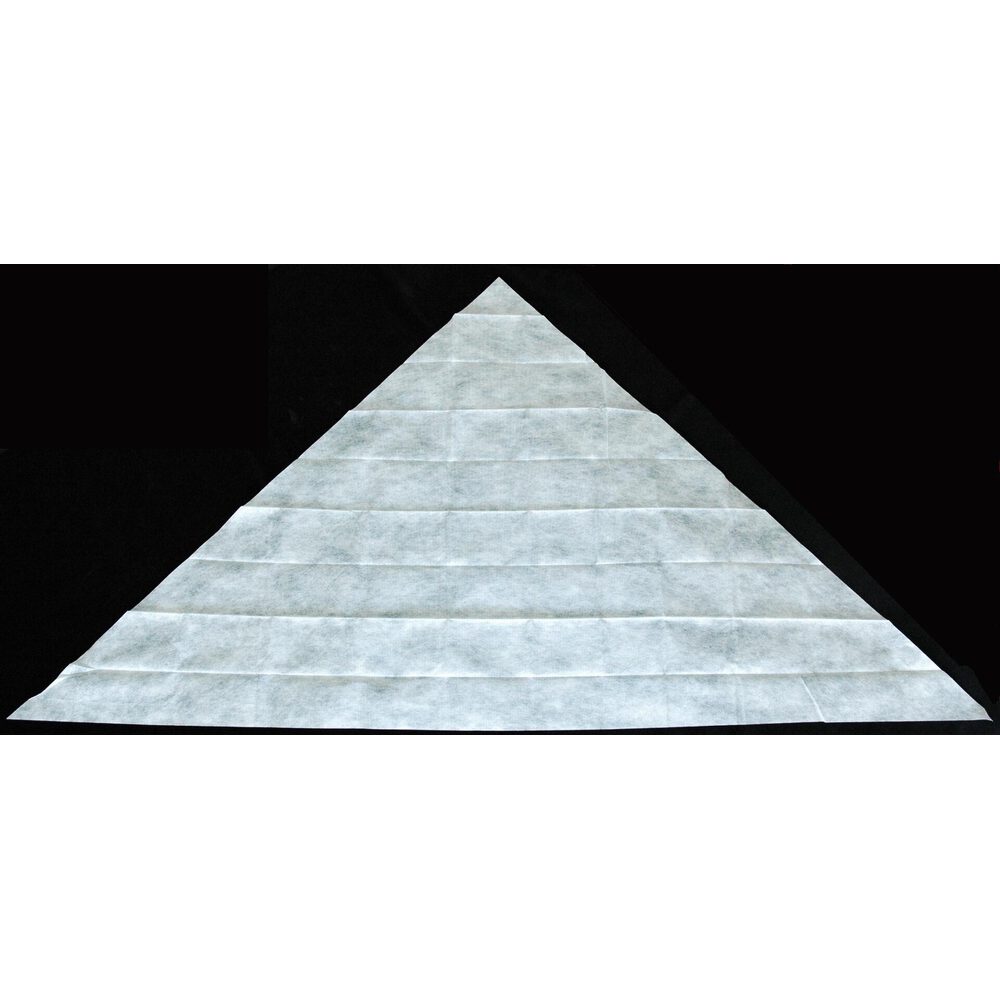
White non-woven triangular bandage, about 96 × 96 × 136 cm, for making an arm sling, securing splints or covering head, hand and foot injuries. Single use, folded in a sealed pack.
| Option | Price | Availability | SKU |
|---|---|---|---|
| 1 piece | ৳70 | In stock | FSB-WA-BND-TRI-1-PIECE |
| Pack of 10 | ৳600 | In stock | FSB-WA-BND-TRI-PACK-OF-10 |
Delivery across Bangladesh. Cash on delivery available.
Delivery:
- Inside Dhaka: ৳60, about 2 days
- Outside Dhaka: ৳120, about 5 days
Payment methods: Cash on delivery, bKash, Credit / debit card, Cards, mobile banking and internet banking (SSLCommerz)
Specifications
- Product code
- FSB-WA-BND-TRI
- Type
- Bandage
- Type
- Triangular bandage
- Material
- Non-woven fabric
- Colour
- White
- Size
- Approximately 96 × 96 × 136 cm
- Single use
- Yes
- Pack
- Folded, individually sealed
- Pack sizes
- 1 piece or 10 pieces
- Pack Size
- 10 pieces, 1 piece
- Color
- White
Description
A triangular bandage is a large triangle of cloth that first-aiders use to make an arm sling, tie a splint in place or cover a large area such as the head, hand or foot. It is the most versatile bandage in a first aid kit because one piece can be used open, folded into a broad or narrow band, or rolled into a ring pad. This one is made of soft white non-woven fabric and comes folded flat in a sealed pack.
What can you do with a triangular bandage?
- Arm sling — support an injured forearm, wrist or hand across the chest.
- Elevation sling — hold the hand high against the opposite shoulder for hand injuries and some shoulder injuries.
- Broad-fold bandage — immobilise an injured arm against the body or tie the legs together when a leg is injured.
- Narrow-fold bandage — fasten a splint or hold a dressing on a limb.
- Cover bandage — hold a dressing on the scalp, a whole hand or a foot.
- Pad — fold it thick to press on a bleeding wound when nothing else is at hand.
Open, broad fold or narrow fold?
| Form | How to make it | Typical use |
|---|---|---|
| Open | Use the full triangle | Slings, head and hand covers |
| Broad fold | Fold the point to the base, then fold in half again | Immobilising a limb, holding large dressings |
| Narrow fold | Fold a broad-fold bandage in half once more | Tying splints, ankle and wrist support |
How do you make a simple arm sling?
- Ask the person to support the injured arm with the other hand, elbow bent.
- Slide the bandage between the arm and chest with the point towards the elbow, and carry the upper end round the back of the neck.
- Bring the lower end up over the forearm and tie the two ends in a knot at the hollow above the collarbone on the injured side.
- Tuck or pin the point at the elbow, and check that the fingertips stay visible, warm and pink.
How many should you keep?
Workplace first-aid lists commonly ask for at least two to four triangular bandages per box, because slings and splints often need more than one. Safety pins are useful for fastening and are kept separately in most kits.
Applications
- Factory and construction site first aid boxes
- School, scout and first-aid training kits
- Sports clubs and playgrounds
- Ambulances, clinics and health camps
- Home, travel and vehicle first aid kits
Recommended usage
Use open as a sling or cover bandage, or fold into a broad or narrow band to immobilise a limb or secure a splint. Tie with a reef (square) knot placed where it will not press on the injury or the back of the neck, and practise the folds before you need them.
Safety instructions
A sling or tie must never cut off circulation: check the fingers or toes after bandaging and loosen if they become pale, cold or numb. The bandage is not sold as a sterile wound dressing — place a sterile pad on open wounds first. Do not move a person with a suspected spine or neck injury; call for medical help.
Frequently asked questions
What is a triangular bandage used for?
A triangular bandage is mainly used to make an arm sling and to tie splints or dressings in place. Opened out it also covers a head, hand or foot injury, and folded thick it works as a pad to press on a bleeding wound.
What size is a standard triangular bandage?
A standard adult triangular bandage measures about 96 × 96 × 136 cm, the two short sides being roughly 96 cm and the long base about 136 cm. That is large enough to make a full arm sling for most adults.
Is a non-woven or a cotton triangular bandage better?
Non-woven triangular bandages are lighter, cheaper and meant for single use, which makes them the usual choice for first aid boxes. Cotton ones are stronger and washable, so they suit training classes where the same bandage is tied again and again.
How many triangular bandages should a first aid box have?
Most workplace first-aid lists ask for two to four triangular bandages in each box. One is needed for a sling, and a second or third is often used at the same time to bind the arm to the chest or to secure a splint.