Standalone Smoke Detector Alarm, 10-Year Battery
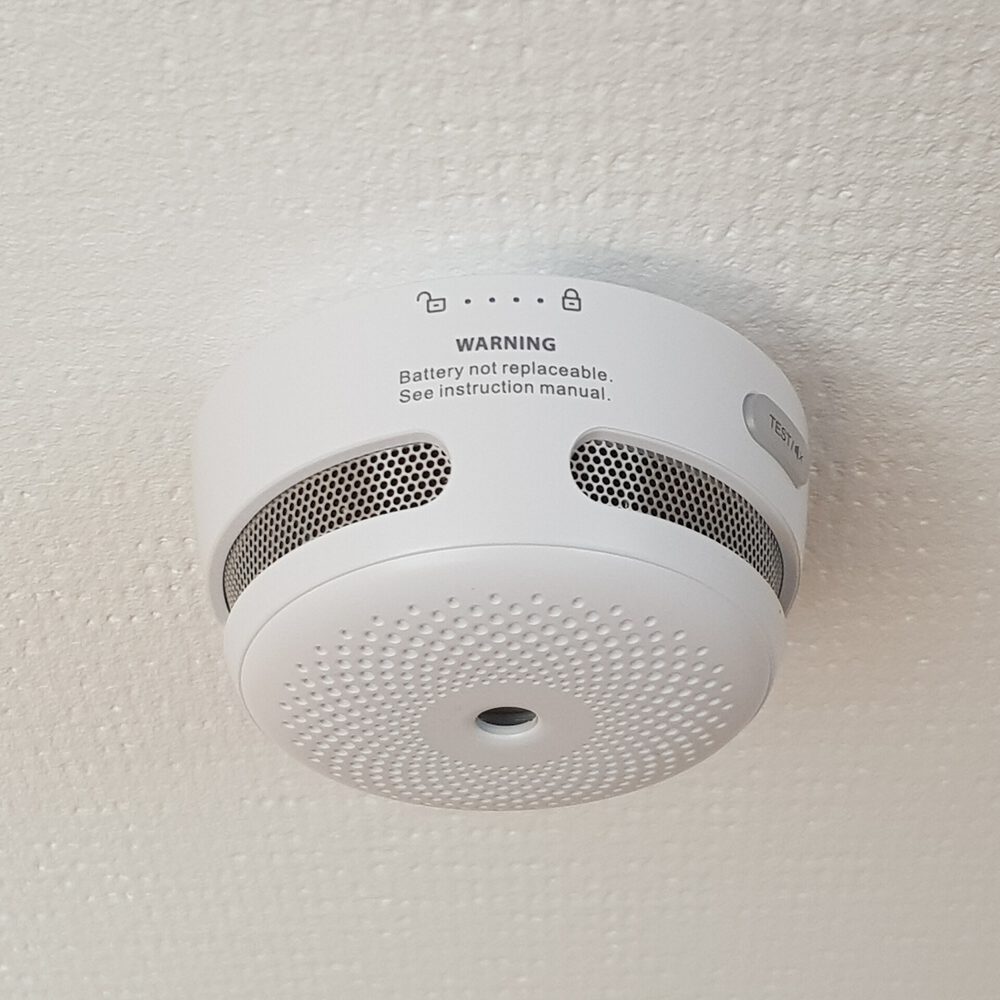
Self-contained photoelectric smoke alarm with a sealed long-life battery and built-in siren. No wiring and no control panel needed — for flats, bedrooms, shops, small offices and stores.
| Option | Price | Availability | SKU |
|---|---|---|---|
| 1 piece | ৳800 | In stock | FSB-FD-SMOKE-SA-1-PIECE |
| Pack of 3 | ৳2,250 | In stock | FSB-FD-SMOKE-SA-PACK-OF-3 |
Delivery across Bangladesh. Cash on delivery available.
Delivery:
- Inside Dhaka: ৳60, about 2 days
- Outside Dhaka: ৳120, about 5 days
Payment methods: Cash on delivery, bKash, Credit / debit card, Cards, mobile banking and internet banking (SSLCommerz)
Specifications
- Product code
- FSB-FD-SMOKE-SA
- Type
- Smoke alarm
- Type
- Standalone (self-contained) smoke alarm
- Sensor
- Photoelectric (optical)
- Colour
- White
- Battery
- Sealed lithium battery, not replaceable, designed for up to about 10 years
- Alarm sound
- Built-in siren, approximately 85 dB at 3 m
- Indicators
- Status LED, low-battery and end-of-life chirp
- Button
- Test and silence (hush)
- Mounting
- Ceiling, twist-lock base fixed with two screws
- Connection to panel
- None — not for use with a fire alarm control panel
- Pack Size
- Pack of 3, 1 piece
- Application
- Shop, Office, Home
- Color
- White
Description
A standalone smoke detector alarm is a complete fire warning device in one small unit: it senses smoke, and its own built-in siren sounds the alarm. It needs no wiring and no control panel — you simply fix it to the ceiling. This compact white model has a sealed, non-replaceable long-life battery, so there are no batteries to change during its service life.
How does it detect smoke?
Inside is a photoelectric (optical) chamber with a light source and a light sensor placed so that the sensor normally sees no light. When smoke enters through the mesh openings around the body, the particles scatter the light onto the sensor and the alarm sounds. Photoelectric alarms respond well to slow, smouldering fires — burning wiring, mattresses, sofas and stored cartons — which are the fires that most often catch people asleep.
Standalone alarm or system detector — which do you need?
| Standalone smoke alarm | System smoke detector | |
|---|---|---|
| Power | Built-in battery | 24 V DC from the fire alarm panel |
| Sounder | Built in | None — the panel rings bells and sounders |
| Wiring | None | Wired to a control panel |
| Best for | Homes, flats, small shops and offices | Factories, commercial and multi-storey buildings |
A standalone alarm warns the people nearby. It does not alert the rest of a large building, so it is not a substitute for a wired fire alarm system where one is required.
Where should you install it?
- One in every bedroom and in the hallway outside the bedrooms
- At least one on every floor, including the stair landing
- In the living room, storeroom and near the electrical meter board
- On the ceiling, at least 30 cm away from walls, lights, fans and AC outlets
Avoid fitting it inside the kitchen or bathroom, where cooking fumes and steam cause false alarms — place it just outside the kitchen door instead.
Testing and care
Press the test button once a month until the siren sounds. Vacuum the mesh gently every few months to remove dust and insects. A short chirp at regular intervals means the battery is near the end of its life; because the battery is sealed, the whole alarm is then replaced. Replace any smoke alarm about ten years after it was made.
Applications
- Bedrooms and hallways in flats and houses
- Stair landings of residential buildings
- Small shops, pharmacies and showrooms
- Small offices and coaching centres
- Storerooms and server cupboards
- Hostel, mess and hotel rooms
Recommended usage
Fix the base to the ceiling near the centre of the room with the screws supplied, twist the alarm onto the base to switch it on, and press the test button. Fit one in each bedroom, in the hallway and on every floor. Test monthly and replace the whole unit when it gives the end-of-life chirp or about ten years after manufacture.
Safety instructions
A smoke alarm only warns — it does not put out a fire, so plan your escape route and leave the building when it sounds. Do not paint the alarm, cover it or remove it because of cooking fumes; move it further from the kitchen instead. Do not open the unit or try to replace the sealed battery. It does not detect gas leaks or carbon monoxide.
Frequently asked questions
Does a standalone smoke detector need wiring or a control panel?
No. A standalone smoke alarm runs on its own battery and has its own siren, so it works without any wiring or fire alarm panel. You only need to screw the base to the ceiling and twist the alarm into place.
Where should a smoke detector be installed in a flat?
Install one on the ceiling of each bedroom, one in the hallway outside the bedrooms and one in the living room. Keep it at least 30 cm from walls, ceiling fans and AC outlets, and outside — not inside — the kitchen and bathroom.
Why does my smoke detector go off when I cook?
Cooking fumes and steam contain fine particles that the sensor reads as smoke. Move the alarm outside the kitchen, a few metres from the stove, and use the hush button to silence a nuisance alarm; never remove the alarm or cover it.
How long does a smoke detector last?
A smoke alarm should be replaced about ten years after its manufacture date, because the sensor becomes less reliable with age and dust. Models with a sealed long-life battery are designed so that the battery lasts for the life of the alarm.
Can a smoke detector detect a gas leak?
No, a smoke alarm detects smoke particles only and will not respond to LPG, natural gas or carbon monoxide. For a gas cylinder or line-gas kitchen you need a separate gas leak detector.