Conventional Optical Smoke Detector with Base
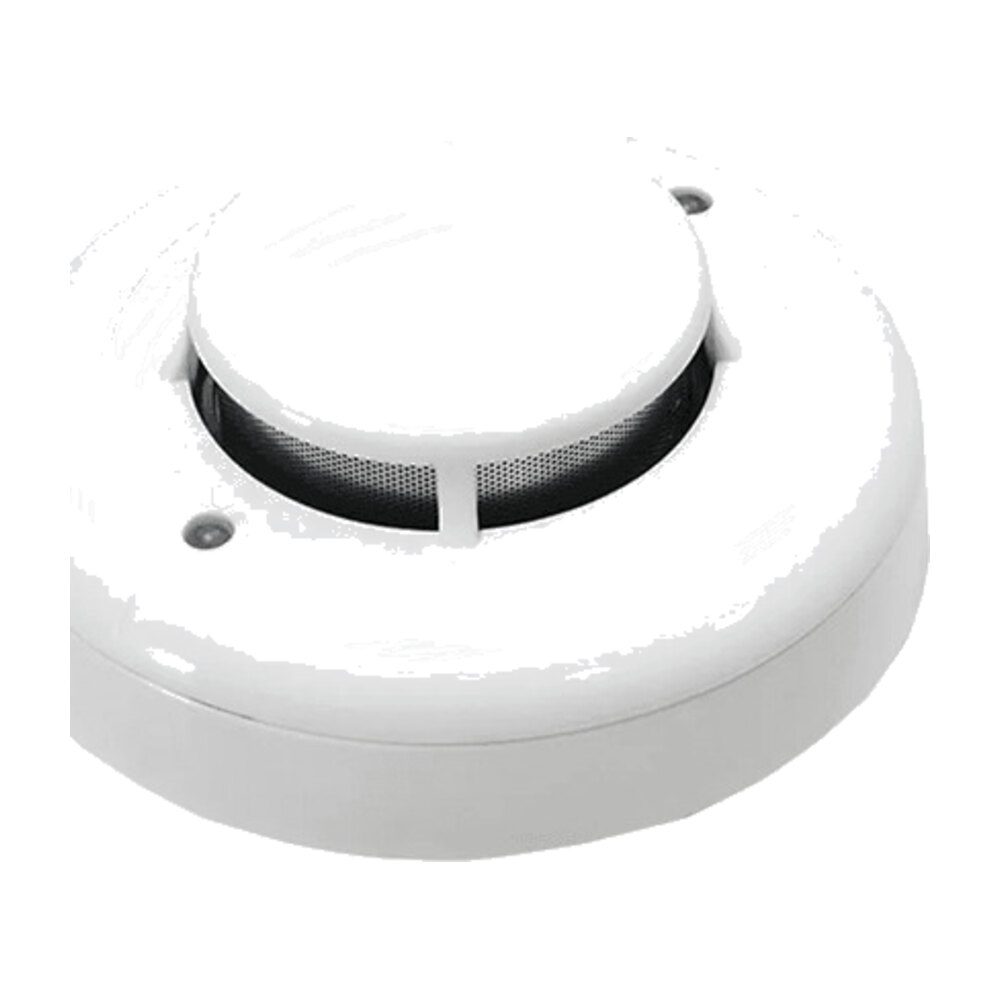
Ceiling-mounted optical (photoelectric) smoke detector with base for conventional fire alarm panels. Two-wire, 24 V DC system detector for offices, factories, hotels and apartment buildings.
| Option | Price | Availability | SKU |
|---|---|---|---|
| 1 piece with base | ৳1,300 | In stock | FSB-FD-SMOKE-CV-1-PIECE-WITH-BASE |
| Pack of 10 with bases | ৳12,500 | In stock | FSB-FD-SMOKE-CV-PACK-OF-10-WITH-BASES |
Delivery across Bangladesh. Cash on delivery available.
Delivery:
- Inside Dhaka: ৳60, about 2 days
- Outside Dhaka: ৳120, about 5 days
Payment methods: Cash on delivery, bKash, Credit / debit card, Cards, mobile banking and internet banking (SSLCommerz)
Specifications
- Product code
- FSB-FD-SMOKE-CV
- Type
- System smoke detector
- Type
- Point-type optical (photoelectric) smoke detector, conventional
- Colour
- White
- Supplied with
- Detector head and mounting base
- Supply
- From the panel zone circuit, 24 V DC nominal
- Wiring
- Two-wire
- Alarm indication
- Red LED on the head, latches until the panel is reset
- Built-in sounder
- None
- Mounting
- Ceiling, twist-lock into base
- Environment
- Indoor, dry, non-dusty areas
- Application
- Hotel, Office, Industrial
- Color
- White
Description
A conventional optical smoke detector is the system-type detector that is wired to a fire alarm control panel. It has no battery and no sounder of its own: it takes its power from the panel's zone circuit and, when smoke enters its chamber, signals the panel, which then rings the bells and sounders throughout the building. This white low-profile detector plugs into a ceiling base, so the head can be removed for cleaning without disturbing the wiring.
How does an optical smoke detector work?
Smoke enters through the mesh-screened opening around the centre of the head into a dark chamber containing an infrared LED and a photodiode. Clean air lets the light pass without reaching the photodiode; smoke particles scatter it onto the photodiode and the detector switches into alarm. The indicator LED on the head then stays lit, which shows which detector on the zone has operated.
Where should smoke detectors be used — and where not?
| Area | Recommended detector |
|---|---|
| Offices, corridors, bedrooms, stores, electrical rooms | Optical smoke detector |
| Kitchens, canteens, boiler and generator rooms | Heat detector |
| Dusty or steamy production areas, car parks | Heat detector |
Smoke detectors give the earliest warning, so use them wherever conditions allow and keep heat detectors for places where smoke, steam or dust is normal.
How many do you need?
Spacing is set by the design code your building follows. As a general guide, a point smoke detector on a flat ceiling protects a radius of about 7.5 m under BS 5839, and NFPA 72 uses a nominal spacing of about 9 m between detectors. Every enclosed room needs its own detector, and beams, partitions and high ceilings reduce the coverage.
Installation notes
- Fix the base to the ceiling, at least 50 cm from walls and away from AC outlets and fans.
- Wire the bases of one zone in parallel, in and out of each base, with the end-of-line resistor in the last one.
- Twist the head into the base only after building dust has settled; keep the dust cover on during construction work.
- Check that the detector's operating voltage and current suit your panel.
Applications
- Offices, meeting rooms and corridors
- Garment factory floors, stores and finished-goods warehouses
- Hotel rooms, hostels and apartment lobbies
- Electrical rooms, server rooms and control rooms
- Hospitals, clinics and schools
- Shops, showrooms and shopping centres
Recommended usage
Use only with a conventional fire alarm control panel. Fix the base to the ceiling, wire the zone circuit through each base with the end-of-line resistor in the last one, then twist the head into place. Test each detector with test smoke after installation and at least once a year, and clean or replace heads that have become dusty.
Safety instructions
This detector has no sounder and gives no warning unless it is connected to a working fire alarm panel with bells or sounders. Do not connect it to mains voltage. Do not paint the head or leave the dust cover on after commissioning. Not suitable for kitchens, bathrooms or very dusty areas, where it will give false alarms.
Frequently asked questions
Can a conventional smoke detector work without a fire alarm panel?
No. A conventional system detector has no battery and no siren, so it does nothing unless it is wired to a fire alarm control panel. If you want a detector that works on its own, choose a standalone battery smoke alarm instead.
What is the difference between an optical and an ionisation smoke detector?
An optical detector senses smoke by light scattering and responds best to slow, smouldering fires, while an ionisation detector uses a tiny radioactive source and responds faster to fast, flaming fires. Optical detectors are now the common choice because they cover the most typical building fires and contain no radioactive material.
How much area does one smoke detector cover?
On a flat ceiling one point smoke detector covers a radius of about 7.5 m under BS 5839, or a nominal spacing of about 9 m under NFPA 72. Real coverage is smaller where there are beams, partitions, racking or high ceilings, and every enclosed room needs its own detector.
How do you clean and test a system smoke detector?
Test it with aerosol test smoke applied to the head until the LED latches and the panel shows fire, then reset the panel. To clean it, twist the head off the base and blow or vacuum the dust from the openings; a head that keeps giving false alarms after cleaning should be replaced.