Lockout Tagout Hasp and Safety Padlock
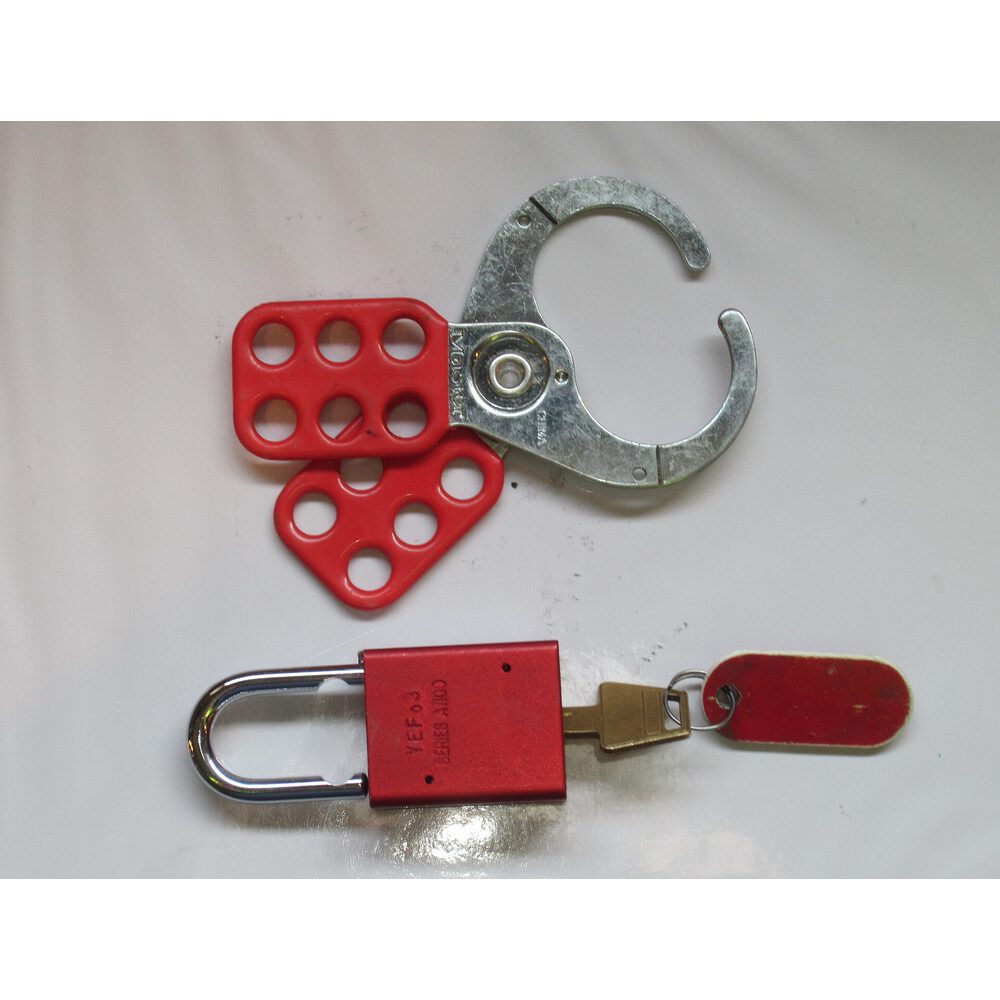
Lockout tagout (LOTO) steel hasp with six padlock holes and a red keyed safety padlock, for isolating switches, breakers and valves during maintenance. Sold as a set or separately.
| Option | Price | Availability | SKU |
|---|---|---|---|
| Hasp only | ৳320 | In stock | OVY-WA-LOTO-SET-HASP-ONLY |
| Safety padlock only | ৳580 | In stock | OVY-WA-LOTO-SET-SAFETY-PADLOCK-ONLY |
| Hasp + padlock set | ৳850 | In stock | OVY-WA-LOTO-SET-HASP-PADLOCK-SET |
Delivery across Bangladesh. Cash on delivery available.
Delivery:
- Inside Dhaka: ৳60, about 2 days
- Outside Dhaka: ৳120, about 5 days
Payment methods: Cash on delivery, bKash, Credit / debit card, Cards, mobile banking and internet banking (SSLCommerz)
Specifications
- Product code
- OVY-WA-LOTO-SET
- Type
- Lockout tagout device
- Type
- Scissor-action group lockout hasp
- Material
- Plated steel jaw with red coated handle
- Padlock holes
- 6
- Jaw opening
- Approximately 25 mm (1 inch) inside diameter
- Body
- Red, compact safety padlock
- Shackle
- Steel, approximately 6 mm diameter
- Keying
- One key per lock, with red key tag
- Options
- Hasp + padlock set, hasp only, padlock only
- Color
- Red
- Application
- Electrical, Industrial
- Model
- Hasp + padlock set, Safety padlock only, Hasp only
Description
A lockout tagout (LOTO) hasp and safety padlock are used to lock an isolating switch, circuit breaker or valve in the OFF position so that nobody can re-energise a machine while someone is working on it. The scissor-type hasp closes through the lock point of the isolator, and each worker then puts a personal padlock through one of its six holes — the equipment cannot be switched on until every person has removed their own lock.
Why is lockout tagout needed?
Many serious maintenance accidents happen when a machine is restarted by someone who did not know a colleague was inside it, or when stored energy is released unexpectedly. Switching off is not enough: a switch can be turned back on. A lock physically prevents it, and a tag tells everyone who applied it and why. LOTO is a routine requirement in buyer safety audits of garment, textile, pharmaceutical, food and power facilities.
What is in the set?
| Item | Description |
|---|---|
| Lockout hasp | Scissor-action steel jaw with red coated handle and six padlock holes |
| Safety padlock | Compact red-bodied padlock with steel shackle and its own key |
| Key tag | Red tag on the key ring for writing a name or number |
How do you use a lockout hasp?
- Tell affected workers and shut the machine down normally.
- Turn the isolator, breaker or valve to OFF.
- Close the hasp jaw through the locking hole of the isolator.
- Every person working on the equipment fits a personal padlock through the hasp and keeps the key.
- Release or block stored energy — pressure, springs, capacitors, raised parts.
- Try to start the machine to prove it is dead, then begin work.
When the job is finished, each person removes only their own padlock. The hasp opens when the last lock is off.
Which option should you buy?
- Set (hasp + padlock) — one isolation point with one worker; add more padlocks for a team.
- Hasp only — when you already have safety padlocks.
- Safety padlock only — extra personal locks, or for locking breakers and valve covers directly.
For a programme with many workers, buy padlocks that are keyed differently so that no key opens another lock, and consider one colour per department or shift.
The basic rule: one person, one lock, one key
A LOTO padlock is a personal safety device, not a security lock. It should carry the owner's name, be used for lockout only, and never be removed by anyone else except under a written procedure.
Applications
- Electrical isolators, main switches and circuit breakers
- Machine maintenance in garment, textile and spinning mills
- Boiler, compressor and generator rooms
- Valves on steam, gas, water and chemical lines
- Pharmaceutical, food and power plant shutdowns
Recommended usage
Use as part of a written lockout tagout procedure: isolate the energy source, close the hasp through the lock point, and have every worker fit a personal padlock and tag before work starts. Always attempt a restart to verify isolation before touching the equipment.
Safety instructions
A lock does not make equipment safe on its own — stored electrical, pneumatic, hydraulic and mechanical energy must also be released or blocked and the isolation tested. Never lend your key, never remove another person's lock, and never use lockout padlocks for general security. Do not cut or force a lock without authorisation under your site procedure.
Frequently asked questions
What is a lockout hasp used for?
A lockout hasp lets several people lock out the same energy source at the same time. The hasp is closed through the isolator, and each worker adds a personal padlock to one of its holes, so the switch or valve cannot be operated until the last worker has removed their lock.
What is the difference between lockout and tagout?
Lockout uses a physical lock to hold an isolator in the safe position, while tagout uses only a warning tag asking people not to operate it. A lock gives real protection; a tag alone gives a warning. Good practice is to use both together, with the tag naming the person who applied the lock.
How is a safety padlock different from an ordinary padlock?
A safety padlock is made for identification and personal control rather than for resisting thieves. It is brightly coloured, light, usually has a unique key so that no other key on site opens it, and is reserved for lockout only. An ordinary padlock may share keys with others and cannot be told apart at a glance.
How many padlocks can be put on one lockout hasp?
This hasp takes up to six padlocks, one in each hole. If more than six people work on the same isolation point, attach a second hasp through one of the holes of the first, or use a group lock box under your site procedure.
Is lockout tagout required in Bangladesh factories?
Lockout tagout is widely expected in Bangladesh factories as part of safe maintenance, and many international buyers and safety audits ask for a written LOTO procedure with locks, hasps and tags. Check your own legal, buyer and insurer requirements with your compliance or safety officer.