Red Fire Hose with Instantaneous Couplings
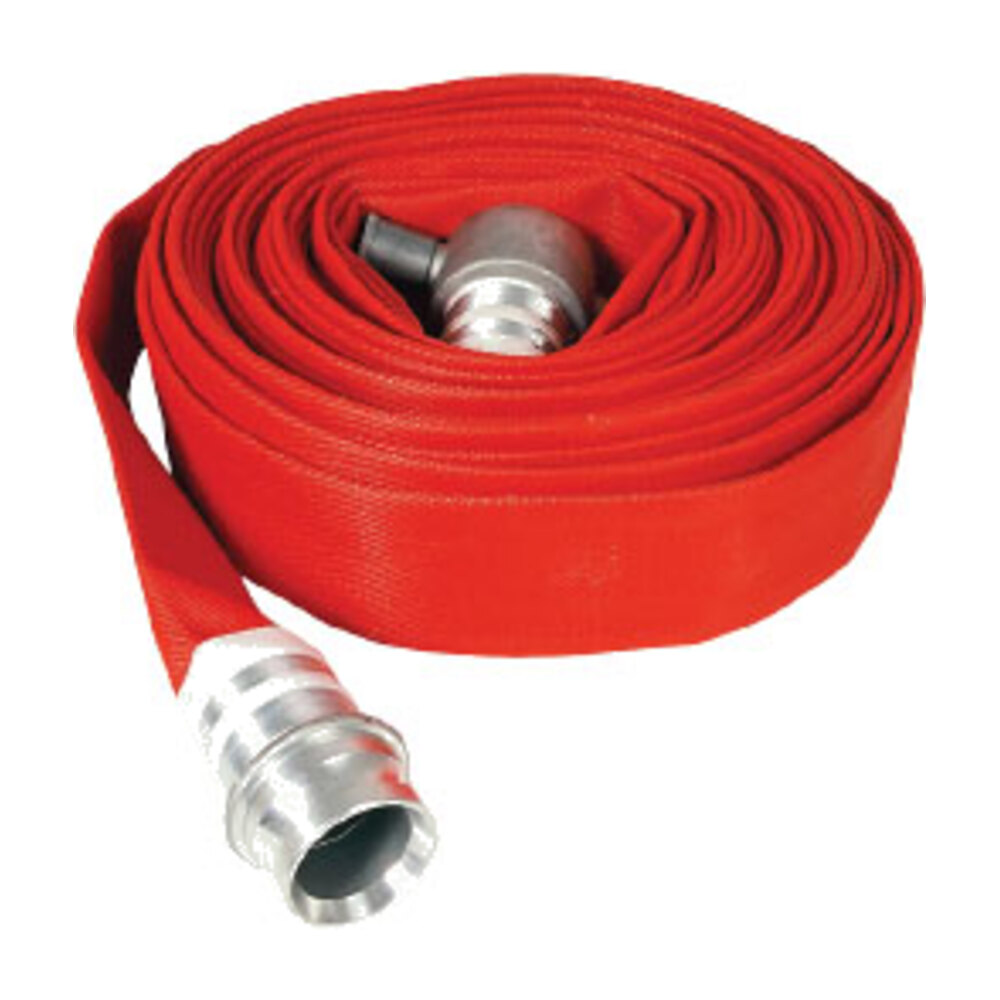
Red jacketed lay-flat fire delivery hose, supplied rolled, with aluminium instantaneous couplings at both ends. 2.5 inch (63 mm) and 1.5 inch (38 mm) bore, 15 m to 30 m lengths, for hydrant points.
| Option | Price | Availability | SKU |
|---|---|---|---|
| 1.5 inch (38 mm) × 15 m | ৳5,400 | In stock | FSB-FF-HOSE-RED-15-INCH-38-MM-15-M |
| 1.5 inch (38 mm) × 20 m | ৳6,800 | In stock | FSB-FF-HOSE-RED-15-INCH-38-MM-20-M |
| 2.5 inch (63 mm) × 20 m | ৳9,800 | In stock | FSB-FF-HOSE-RED-25-INCH-63-MM-20-M |
| 2.5 inch (63 mm) × 30 m | ৳13,800 | In stock | FSB-FF-HOSE-RED-25-INCH-63-MM-30-M |
Delivery across Bangladesh. Cash on delivery available.
Delivery:
- Inside Dhaka: ৳60, about 2 days
- Outside Dhaka: ৳120, about 5 days
Payment methods: Cash on delivery, bKash, Credit / debit card, Cards, mobile banking and internet banking (SSLCommerz)
Specifications
- Product code
- FSB-FF-HOSE-RED
- Type
- Fire hose
- Type
- Lined lay-flat fire delivery hose, red jacket
- Colour
- Red
- Available bores
- 1.5 inch (38 mm), 2.5 inch (63 mm)
- Available lengths
- 15 m, 20 m, 30 m (by size)
- Jacket
- Woven synthetic yarn, red
- Lining
- Rubber or PVC
- Couplings
- Aluminium alloy instantaneous couplings, one male and one female, wire-bound
- Supplied
- Rolled, with both couplings fitted
- Inspection
- Visual check after each use; pressure test about once a year
- Application
- Hydrant system, Industrial
- Color
- Red
- Size
- 2.5 inch (63 mm), 1.5 inch (38 mm)
Description
A red fire hose is a lay-flat delivery hose with a red woven jacket over a waterproof lining. It takes water under pressure from a landing valve, yard hydrant or fire pump to the nozzle, and is the heavier-duty alternative to plain white canvas hose for sites where hoses are run out often. This hose is supplied rolled, with an aluminium instantaneous coupling bound to each end — one male and one female.
How is a red hose different from a white canvas hose?
| Red jacketed hose | White canvas hose | |
|---|---|---|
| Outer surface | Red woven jacket, usually with a protective coating or covering | Bare woven jacket |
| Abrasion and dirt | Stands up better to rough ground and frequent use | Marks and wears sooner |
| Visibility | Easy to see on the ground and in a hose box | Shows dirt and mildew quickly |
| Weight | Usually heavier | Lighter |
| Typical users | Industrial yards, depots, power plants, sites with regular drills | Building hose boxes used only in an emergency |
How much water a red hose takes up depends on its construction, so drain it and let it dry before long storage in the same way as a canvas hose.
Which couplings does it have?
Both ends carry aluminium alloy instantaneous couplings, the push-fit type used on most hydrant systems in Bangladesh. The male end is pushed into the female outlet of a landing valve until the lugs click, and the nozzle (branch pipe) is pushed into the female end of the hose. No spanner or turning is needed; the joint is released by pulling or twisting the lugs on the female half.
Which size should you choose?
- 2.5 inch (63 mm) — the usual size for landing valves, yard hydrants and fire brigade inlets in Bangladesh. High flow; needs two people on the nozzle at working pressure.
- 1.5 inch (38 mm) — a lighter line that one or two people can move quickly; for small pumps and smaller-bore hose points.
Pick the length — 15 m, 20 m or 30 m — from the distance between the hydrant and the farthest point it has to cover, allowing for the reach of the jet.
Care
Rinse off mud and chemicals, check the jacket for cuts and the wire binding at each coupling for movement, and keep the rubber seal in the female coupling clean. Roll the hose flat for storage, re-roll it from time to time so that the folds move, and have it pressure-tested about once a year and after any repair.
Applications
- Industrial yards and factory hydrant rings
- Garment, textile and other factory hose boxes
- Power plants, substations and depots
- Warehouses, godowns and fuel storage sites
- Industrial fire team pumps and regular fire drills
- Construction-site fire points
Recommended usage
Use where hoses are run out often or over rough ground. Make sure every landing valve, hydrant and nozzle the hose must connect to has an instantaneous coupling of the same size — 63 mm (2.5 inch) is the usual hydrant size in Bangladesh — or keep the right adaptors with the hose. Rinse, inspect, dry and re-roll after each use.
Safety instructions
Tug each coupling after connecting to check that the lugs have locked before the line is charged, and open the valve slowly. Hold the nozzle firmly; a 63 mm line needs at least two people at working pressure. Never release a coupling under pressure and never direct a water jet at live electrical equipment or burning oil. Withdraw a hose with a cut jacket, a bulge or a loose coupling binding from service.
Frequently asked questions
What size of fire hose is used on hydrants in Bangladesh?
Hydrant points, landing valves and fire brigade inlets in Bangladesh normally use 63 mm (2.5 inch) hose with instantaneous couplings. Hydrant equipment of this type is usually made to the BS 336 coupling pattern, so check that your valves, hoses and nozzles all share the same size and pattern before ordering.
Can a hose with instantaneous couplings be connected to a Storz or threaded outlet?
Not directly — an instantaneous coupling only locks into an instantaneous coupling of the same size and pattern. To use this hose on a pump or valve with a Storz or threaded outlet you need an adaptor with that coupling on one side and an instantaneous female on the other.
Which is better for a factory, 38 mm or 63 mm fire hose?
Use 63 mm hose on hydrants and landing valves where a large volume of water is needed, and 38 mm where staff must move a lighter line quickly. A 63 mm line delivers much more water but is heavy and hard to move once charged, and the hose size must in any case match the outlet of the valve it is kept beside.
Does a red fire hose need to be dried after use?
Yes, it is safest to drain a red fire hose and let it dry before rolling it up for storage. A coated jacket takes up less water than bare canvas, but damp left in the weave or around the couplings can still cause mildew and corrosion in a closed hose box.
How often should a fire hose be tested?
A fire hose should be inspected after every use and pressure-tested about once a year. Look for cuts or worn patches in the jacket, damaged coupling seals and any movement of the hose in its coupling binding; a hose that leaks or bulges under test must be repaired or replaced.