Canvas Fire Hose with Instantaneous Couplings
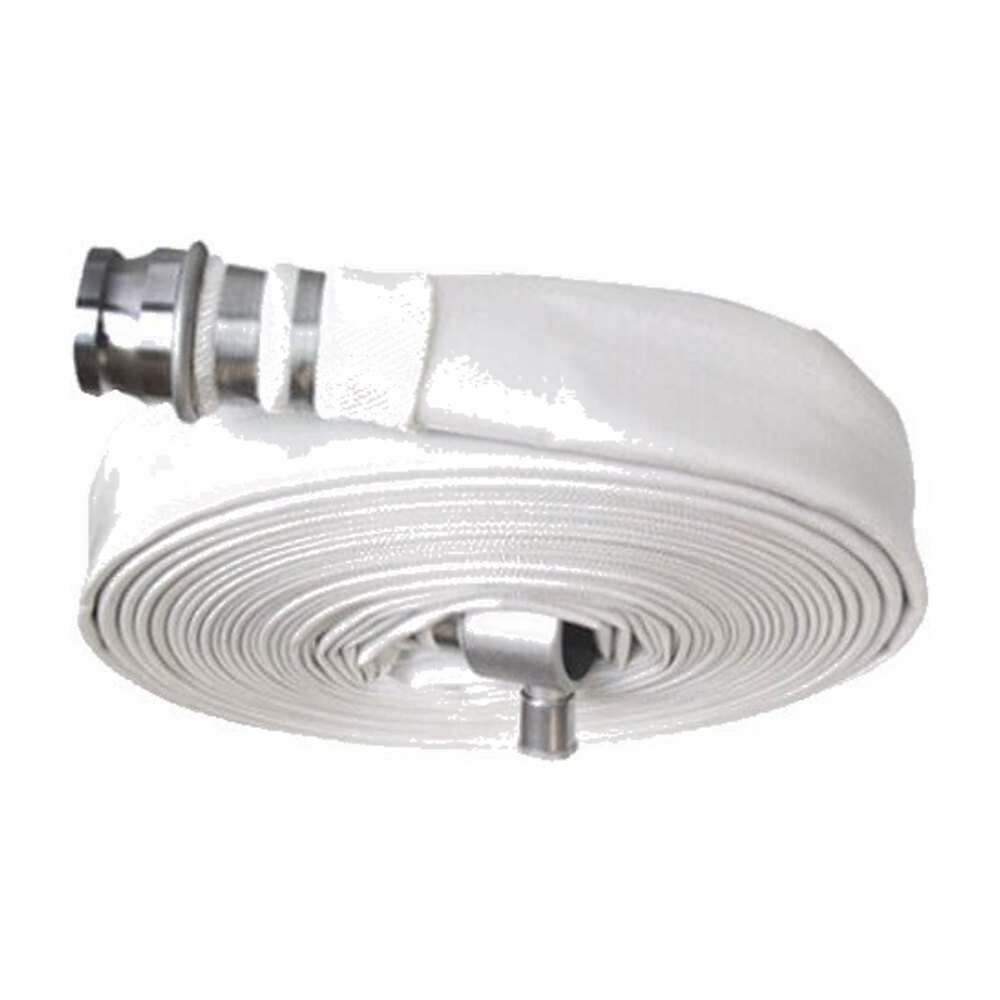
White lay-flat canvas fire hose with an inner lining and aluminium instantaneous couplings, male and female. 2.5 inch (63 mm) and 1.5 inch bore in 15 m, 20 m and 30 m lengths for hydrant systems.
| Option | Price | Availability | SKU |
|---|---|---|---|
| 1.5 inch (38 mm) × 15 m | ৳2,300 | In stock | FSB-FF-HOSE-CANVAS-15-INCH-38-MM-15-M |
| 1.5 inch (38 mm) × 20 m | ৳2,800 | In stock | FSB-FF-HOSE-CANVAS-15-INCH-38-MM-20-M |
| 2.5 inch (63 mm) × 15 m | ৳3,300 | In stock | FSB-FF-HOSE-CANVAS-25-INCH-63-MM-15-M |
| 1.5 inch (38 mm) × 30 m | ৳3,800 | In stock | FSB-FF-HOSE-CANVAS-15-INCH-38-MM-30-M |
| 2.5 inch (63 mm) × 20 m | ৳4,100 | In stock | FSB-FF-HOSE-CANVAS-25-INCH-63-MM-20-M |
| 2.5 inch (63 mm) × 30 m | ৳5,600 | In stock | FSB-FF-HOSE-CANVAS-25-INCH-63-MM-30-M |
Delivery across Bangladesh. Cash on delivery available.
Delivery:
- Inside Dhaka: ৳60, about 2 days
- Outside Dhaka: ৳120, about 5 days
Payment methods: Cash on delivery, bKash, Credit / debit card, Cards, mobile banking and internet banking (SSLCommerz)
Specifications
- Product code
- FSB-FF-HOSE-CANVAS
- Type
- Fire hose
- Type
- Lined lay-flat fire delivery hose, woven jacket
- Available bores
- 1.5 inch (38 mm), 2.5 inch (63 mm)
- Available lengths
- 15 m, 20 m, 30 m
- Jacket
- Woven synthetic yarn, white
- Lining
- Rubber or PVC
- Couplings
- Aluminium alloy instantaneous couplings, one male and one female, wire-bound
- Storage
- Rolled flat; must be dried before storage
- Inspection
- Visual check after each use; pressure test about once a year
- Application
- Hydrant system, Industrial
- Size
- 2.5 inch (63 mm), 1.5 inch (38 mm)
- Material
- Woven jacket with rubber/PVC lining
- Color
- White
Description
A canvas fire hose is a lay-flat delivery hose with a woven textile jacket on the outside and a thin waterproof lining inside. It carries water under pressure from a landing valve, hydrant valve or fire pump to the nozzle, and rolls up flat for storage in a hose box. This hose has a white woven jacket and an aluminium instantaneous coupling at each end — one male and one female — the push-fit type used on most hydrant systems in Bangladesh.
What is a canvas fire hose made of?
- Jacket — tightly woven synthetic yarn (commonly polyester). The jacket takes the pressure and gives the hose its strength.
- Lining — a thin rubber or PVC tube bonded inside the jacket so that water does not seep through and friction loss stays low.
- Couplings — aluminium alloy instantaneous couplings bound to the ends with wire. The male half is a plain spigot with a raised rim; the female half has a rubber seal and spring-loaded lugs that snap behind that rim.
Which size and length should you choose?
| Bore | Typical use |
|---|---|
| 2.5 inch (63 mm) | The usual hydrant and landing-valve hose in factories, warehouses and high-rise buildings in Bangladesh; needs two people at full pressure |
| 1.5 inch (38 mm) | Lighter hose for small pumps and smaller-bore hose points; easier for one person to handle |
Choose the length so that the hose, plus the throw of the water jet, reaches the farthest corner of the area that hydrant point has to cover. 15 m and 20 m lengths suit stairwell landing valves; 30 m suits yard hydrants.
How do instantaneous couplings connect?
Push the male coupling straight into the female coupling until the lugs click — no turning or spanner is needed. To release, pull the lugs outward (on some patterns, twist them) and draw the two halves apart. The male end of the hose goes into the female outlet of the landing valve, and the nozzle (branch pipe) goes into the female end of the hose. Two hoses join male to female in the same way.
How do you use it?
- Check in advance that the couplings are the same size and pattern as your valves and nozzles.
- Run the hose out fully and remove kinks and twists.
- Push the male end into the valve outlet and the nozzle into the female end; tug each joint to make sure it has locked.
- Hold the nozzle firmly, then have a second person open the valve slowly.
How do you look after a canvas hose?
Drain the hose after every use, wash off mud, and hang or lay it out to dry completely in the shade before rolling it — a woven jacket stored wet will rot or grow mildew. Keep it away from oil, acids and sharp edges, re-roll it now and then so the folds do not stay in the same place, and have it pressure-tested about once a year.
Applications
- Garment and textile factory hydrant systems
- Warehouses, godowns and cold storages
- High-rise residential and commercial buildings
- Power plants, depots and industrial yards
- Portable fire pumps and trailer pumps
- Fire drill and training use
Recommended usage
Keep one rolled hose with a nozzle in the hose box beside every hydrant or landing valve. Confirm that the coupling size and pattern match the valves and nozzles on your site — most hydrant systems in Bangladesh use 63 mm (2.5 inch) instantaneous couplings. After use, drain, dry in the shade and re-roll before returning it to the box.
Safety instructions
A charged hose pushes back hard — hold the nozzle firmly and open the valve slowly; a 2.5 inch line needs two people. Tug every coupling after connecting to be sure the lugs have locked, and never release a coupling under pressure. Never direct a water jet at live electrical equipment, burning oil or flammable liquids. Do not drag the hose over sharp edges or hot debris, do not drive vehicles over it, and take a hose with a cut, bulge or leaking coupling out of service.
Frequently asked questions
What is the difference between canvas fire hose and rubber-covered fire hose?
A canvas hose has a bare woven jacket outside, while a covered hose has an extra rubber or plastic layer over the jacket. Canvas hose is lighter and costs less, but it soaks up water and must be dried after use. Covered hose resists abrasion, oil and chemicals better and only needs wiping clean, so it lasts longer in rough industrial yards.
What length of fire hose do I need for a hydrant point?
Most hydrant and landing-valve points are equipped with a 15 m, 20 m or 30 m hose. Measure the walking distance from the valve to the farthest corner it must protect, allow for the reach of the jet, and remember that two lengths can be coupled together when one is not enough.
Will this hose fit my hydrant valve?
It will fit if your valve has an instantaneous female outlet of the same size, which is the usual arrangement on landing valves in Bangladesh. Fire hose couplings are not universal — instantaneous, Storz and threaded couplings do not connect to each other without an adaptor — so check the coupling type and size on your landing valves and nozzles before ordering.
What is an instantaneous coupling on a fire hose?
An instantaneous coupling is a push-fit hose coupling with a male half and a female half that lock together without turning. The male spigot is pushed into the female half until spring-loaded lugs snap behind its rim, and the joint is released by pulling or twisting the lugs. Hydrant equipment of this kind is normally made to the BS 336 pattern, so look for that pattern and the same size on every item you connect.
How should a canvas fire hose be stored?
Store it completely dry, rolled flat, in a ventilated hose box away from sunlight, oil and chemicals. Roll it so that the couplings are not knocked or crushed, and re-roll it every few months so the folds do not crack in the same place.