Emergency Fog Light (Twin Head, Rechargeable)
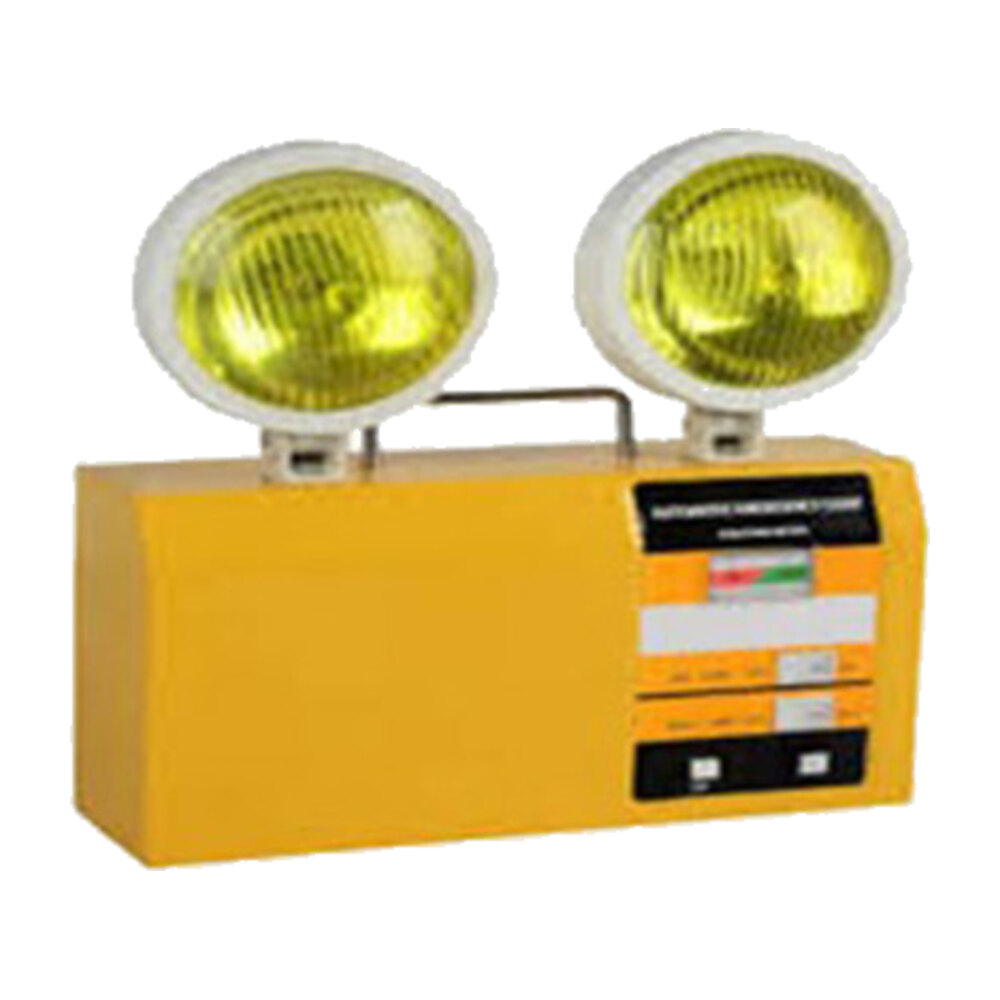
Yellow twin head emergency fog light with built-in rechargeable battery. Switches on automatically when the mains fails to light stairs, corridors and exits in factories, offices and apartments.
| Option | Price | Availability | SKU |
|---|---|---|---|
| 1 piece | ৳1,800 | In stock | FSB-FD-EL-TWIN-1-PIECE |
| Pack of 4 | ৳6,900 | In stock | FSB-FD-EL-TWIN-PACK-OF-4 |
Delivery across Bangladesh. Cash on delivery available.
Delivery:
- Inside Dhaka: ৳60, about 2 days
- Outside Dhaka: ৳120, about 5 days
Payment methods: Cash on delivery, bKash, Credit / debit card, Cards, mobile banking and internet banking (SSLCommerz)
Specifications
- Product code
- FSB-FD-EL-TWIN
- Type
- Emergency light
- Type
- Self-contained twin head emergency fog light, non-maintained
- Light source
- Two adjustable round lamp heads with yellow lenses
- Colour
- Yellow housing, yellow lenses
- Supply
- 220–240 V AC, 50 Hz
- Battery
- Built-in rechargeable battery
- Operation
- Lights automatically on mains failure, off when the supply returns
- Backup time
- Typically 1.5 to 3 hours from a full charge, depending on model
- Recharge time
- About 24 hours
- Test and indicator
- Test switch and battery charge meter on the front panel
- Mounting
- Wall, bracket or shelf, indoor; carrying handle on top
- Application
- Office, Industrial, Residential building
- Color
- Yellow
Description
An emergency fog light is a self-contained emergency light with its own rechargeable battery that switches on by itself the moment the mains supply fails. It is the yellow box-type unit seen on the walls of most factories in Bangladesh: two round lamp heads with yellow lenses sit on top of a yellow battery cabinet and throw light along stairs, corridors and exit doors, so that people can find their way out during a power cut or a fire. While the electricity is on, the lamps stay off and the unit simply keeps its battery charged.
Why is it called a fog light?
The two lamps have yellow lenses, like the fog lamps of a vehicle. A yellow beam is generally considered to give less glare in smoke, dust and haze than a white beam, which is why this style has become the usual emergency light for factory floors, stairs and godowns.
How does it work?
The unit is connected permanently to the 220 V supply. A charger inside keeps the battery full, and the charge meter on the front panel shows the condition of the battery. When the supply is lost — load-shedding, a tripped breaker or the power being cut in a fire — an automatic changeover circuit switches the two lamps to battery power instantly. When the mains returns, the lamps switch off and the battery recharges.
Where should emergency lights be installed?
- Above or beside every exit door
- On every stair flight and landing
- At changes of direction and intersections in corridors
- Near fire extinguishers, hose reels, call points and the fire alarm panel
- In generator rooms, electrical rooms, lift lobbies and windowless washrooms
Aim one head each way along the escape route. As a guide, EN 1838 asks for at least 1 lux along the centre line of an escape route; factory safety audits in Bangladesh commonly check that every stair and exit route stays lit when the power is switched off.
What should you check before buying?
| Point | What to look for |
|---|---|
| Duration | The rated running time on battery — commonly 1.5 to 3 hours |
| Lamps | The lamp type and wattage — LED lamps run longer on the same battery than halogen lamps |
| Test switch | Lets you simulate a power failure |
| Charge meter | Shows that the battery is charged and the charger is working |
| Mounting | On the wall or on a bracket or shelf, heads adjustable |
Testing and battery care
Operate the test switch for a few seconds every month to confirm both lamps light. Once or twice a year, switch off the supply and let the unit run for its full rated time, then allow about 24 hours for recharging. Rechargeable batteries wear out: replace the battery, or the unit, when it can no longer run for its rated time.
Applications
- Staircases and stair landings
- Corridors and exit routes in garment factories
- Office floors, lobbies and lift lobbies
- Apartment building stairs and basements
- Generator rooms and electrical rooms
- Shops, restaurants, clinics and warehouses
Recommended usage
Fix the unit high on the wall or on a firm bracket, about 2 m or more above the floor, connect it to a permanent unswitched 220 V supply and aim one head each way along the escape route. Let the battery charge for about 24 hours before the first test. Operate the test switch monthly and run a full-duration test once or twice a year.
Safety instructions
Have the mains connection made by an electrician and switch off the supply before opening the unit. Do not connect it through a light switch that is turned off at night, or the battery will drain. The battery makes the unit heavy, so fix it to a sound wall or bracket. Do not look directly into the lamps at close range. Dispose of worn-out rechargeable batteries responsibly; do not burn or puncture them.
Frequently asked questions
What is an emergency fog light?
An emergency fog light is a rechargeable emergency light with two lamp heads fitted with yellow lenses on a box that holds the battery and charger. It stays connected to the mains and lights automatically when the power fails, and it is the type most often fitted on factory stairs, corridors and exits in Bangladesh.
How does an automatic emergency light work?
It stays connected to the mains, keeps its battery charged and switches its lamps on automatically the instant the supply fails. When the electricity comes back, the lamps switch off and the battery recharges, so nobody has to operate it.
How long does an emergency light stay on during a power cut?
Most self-contained emergency lights run for 1.5 to 3 hours on a full charge, depending on the model and the condition of the battery. Building codes commonly ask for at least 90 minutes, and older batteries give less, which is why a yearly full-duration test matters.
Where should emergency lights be placed in a factory?
Place them at every exit door, on every staircase and landing, at corridor turns and intersections, and near firefighting equipment and the fire alarm panel. The aim is that the whole route from any workstation to the outside stays lit when the power is off.
How do you test an emergency light?
Operate the test switch: the lamps should light from the battery straight away. Do this monthly, and once or twice a year switch off the supply and check that the unit runs for its full rated time.