ABC Dry Powder Trolley Fire Extinguisher
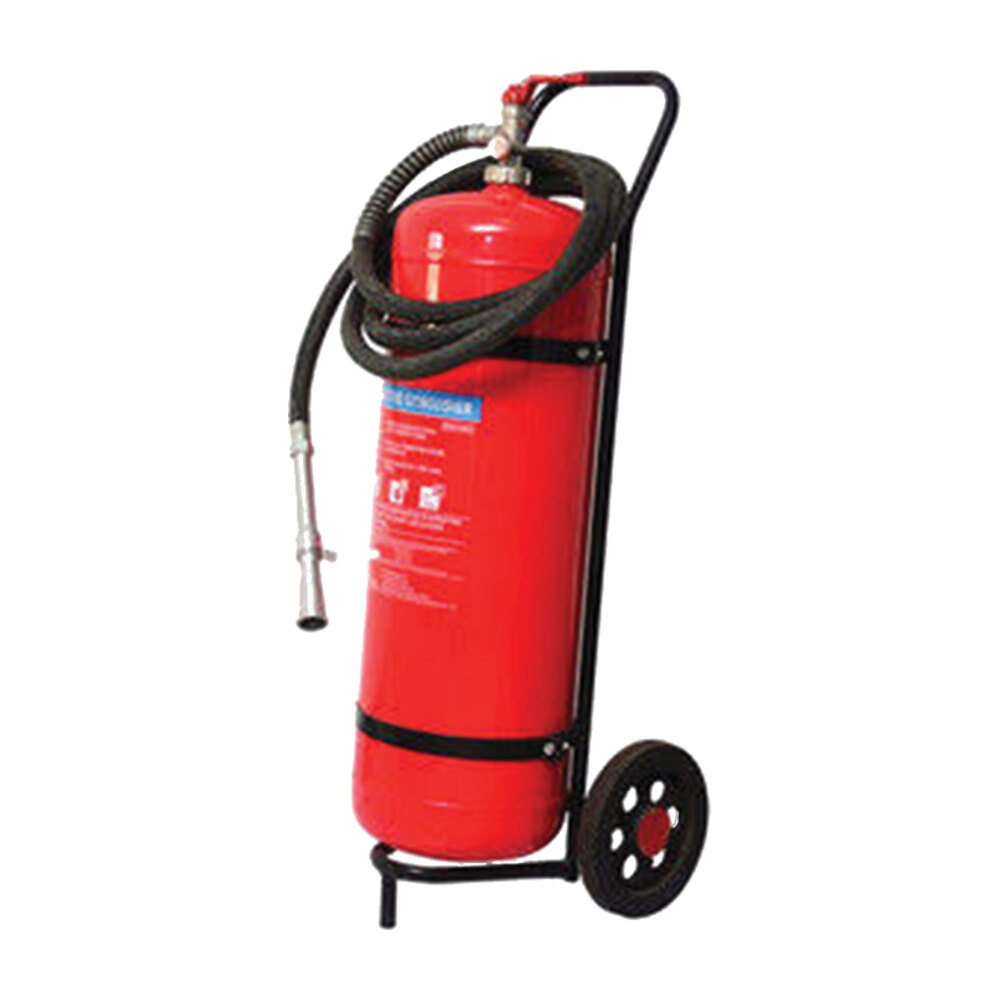
Wheeled ABC dry powder fire extinguisher in 25 kg and 50 kg sizes with a long discharge hose. High-capacity mobile protection for factories, warehouses, fuel stations and power rooms.
| Option | Price | Availability | SKU |
|---|---|---|---|
| 25 kg | ৳15,000 | In stock | FSB-FE-ABC-TROLLEY-25-KG |
| 50 kg | ৳20,000 | In stock | FSB-FE-ABC-TROLLEY-50-KG |
Delivery across Bangladesh. Cash on delivery available.
Delivery:
- Inside Dhaka: ৳60, about 2 days
- Outside Dhaka: ৳120, about 5 days
Payment methods: Cash on delivery, bKash, Credit / debit card, Cards, mobile banking and internet banking (SSLCommerz)
Specifications
- Product code
- FSB-FE-ABC-TROLLEY
- Type
- Wheeled fire extinguisher
- Fire class
- Class A, B, C, live electrical
- Extinguishing agent
- ABC dry chemical powder (monoammonium phosphate based)
- Suitable for
- Class A solids, Class B flammable liquids, Class C flammable gases, live electrical equipment
- Not suitable for
- Cooking oil (Class F), burning metals (Class D)
- Available sizes
- 25 kg, 50 kg
- Type
- Stored pressure, nitrogen propellant, with pressure gauge
- Cylinder
- Welded steel, red finish
- Trolley
- Steel frame with handle and two rubber-tyred wheels
- Hose
- Approximately 3–5 m with shut-off nozzle
- Discharge range
- Approximately 6–10 m
- Discharge time
- Approximately 25–60 seconds depending on size
- Refillable
- Yes
- Capacity
- 25 kg, 50 kg
- Agent Type
- ABC Dry Powder
- Application
- Fuel Station, Industrial, Warehouse
Description
An ABC dry powder trolley fire extinguisher is a large powder cylinder mounted on a two-wheeled frame, so one person can wheel it to a fire that is too big for a hand-held unit. It holds 25 kg or 50 kg of ABC powder — several times more than a portable extinguisher — and is used where a fire can grow quickly: factory floors, godowns, fuel stations and generator yards.
What is a trolley fire extinguisher used for?
It covers the same fire classes as a portable ABC unit, only with far more powder and a longer reach:
- Class A — cartons, fabric, wood, plastics.
- Class B — petrol, diesel, furnace oil, paint and solvents.
- Class C — LPG and natural gas.
- Live electrical equipment — transformers, generators and panels, up to the voltage printed on the label.
It is not for cooking-oil or metal fires.
When do you need a trolley unit instead of portables?
Choose a wheeled unit where the fire load is high or a fire could involve a large amount of fuel at once — a dyeing or chemical store, a diesel tank area, a loading bay, a boiler house, a sub-station yard. Portables are still needed for the first response; the trolley unit is the back-up that keeps discharging after a 5 kg or 6 kg unit has run out.
25 kg or 50 kg?
| Size | Typical use | Approximate discharge time |
|---|---|---|
| 25 kg | Warehouse bays, workshops, generator rooms, small fuel stores | 25–35 seconds |
| 50 kg | Fuel stations, chemical and paint stores, boiler houses, large factory sheds | 40–60 seconds |
How do you use it?
- Wheel the unit to a safe distance upwind of the fire and stand it upright.
- Uncoil the full length of the hose.
- Pull the safety pin and open the cylinder valve.
- Hold the nozzle firmly, open it and sweep the powder across the base of the fire.
Two people make this faster — one to control the nozzle, one to open the valve and manage the hose.
How do you maintain it?
Check the pressure gauge monthly, keep the hose coiled without kinks, and make sure the wheels turn freely and the route to the risk area is not blocked. Have it serviced yearly and refilled after any use.
Applications
- Garment, textile and dyeing factory floors
- Warehouses, godowns and loading bays
- Petrol pumps, CNG and LPG filling stations
- Generator yards, sub-stations and boiler houses
- Chemical, paint and fuel stores
- Ports, depots and construction sites
Recommended usage
Park the trolley on level ground beside the risk area, on the escape-route side, with a clear path wide enough to wheel it. Keep portable extinguishers nearby for first response and train at least two people per shift to operate the wheeled unit.
Safety instructions
Approach the fire from upwind and never let the fire get between you and the exit. Uncoil the whole hose before opening the valve and hold the nozzle firmly — the discharge has a strong kick. The powder cloud reduces visibility and irritates the airways; ventilate afterwards. Not for cooking-oil or metal fires. Store out of direct sun, below 60 °C, and chock or park the unit so that it cannot roll.
Frequently asked questions
What is a trolley type fire extinguisher?
A trolley type fire extinguisher is a large extinguisher, usually 25 kg or more, fixed on a wheeled frame so it can be pushed to the fire by one person. It holds much more agent than a portable unit and has a long hose, so it is used for bigger fires in factories, warehouses and fuel stations.
Where should a 50 kg trolley extinguisher be installed?
A 50 kg unit belongs beside high fire-load areas such as fuel dispensers, diesel tanks, chemical and paint stores, boiler houses and large factory sheds. Park it on level ground with a clear wheeling path, close enough to reach the risk in well under a minute.
Can one person operate a wheeled fire extinguisher?
Yes, a trained person can wheel and operate a 25 kg or 50 kg unit alone, but two people are faster and safer. One person runs out the hose and controls the nozzle while the other opens the valve and keeps the hose from kinking.
Does a trolley extinguisher replace portable extinguishers?
No. A wheeled unit is a back-up for larger fires, not a replacement for portables. Hand-held extinguishers are quicker to grab for a small fire, so sites normally keep both and place the trolley unit near the highest-risk area.