Wheel Chock — Plastic Wheel Stopper for Vehicles
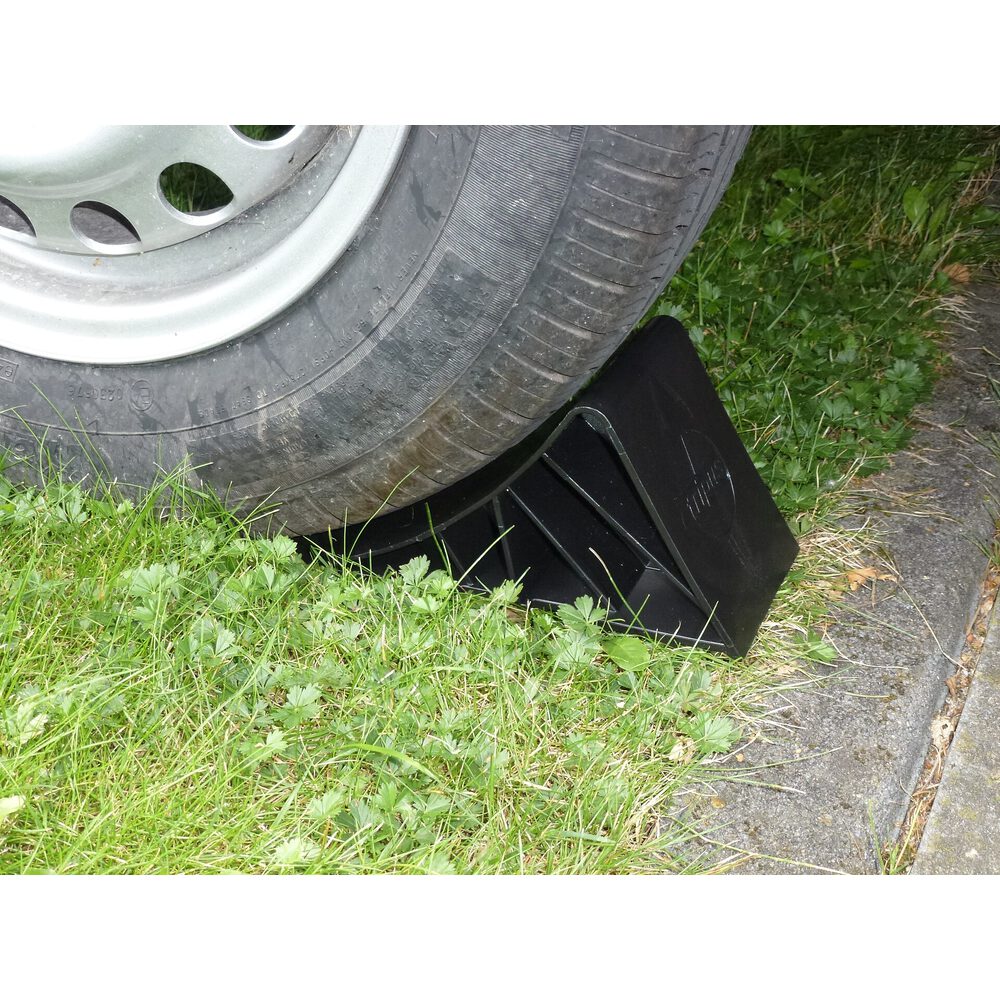
Black moulded plastic wheel chock that wedges against the tyre to stop a parked car, pickup, trailer or light truck from rolling during loading, repair or a tyre change.
| Option | Price | Availability | SKU |
|---|---|---|---|
| Car / light van — single | ৳450 | In stock | OVY-HV-CHOCK-CAR-LIGHT-VAN-SINGLE |
| Car / light van — pair | ৳850 | In stock | OVY-HV-CHOCK-CAR-LIGHT-VAN-PAIR |
| Truck — single | ৳1,200 | In stock | OVY-HV-CHOCK-TRUCK-SINGLE |
Delivery across Bangladesh. Cash on delivery available.
Delivery:
- Inside Dhaka: ৳60, about 2 days
- Outside Dhaka: ৳120, about 5 days
Payment methods: Cash on delivery, bKash, Credit / debit card, Cards, mobile banking and internet banking (SSLCommerz)
Specifications
- Product code
- OVY-HV-CHOCK
- Type
- Vehicle safety accessory
- Type
- Wedge wheel chock
- Material
- Moulded heavy-duty plastic
- Colour
- Black
- Tyre face
- Curved to match the tyre
- Base
- Ribbed for grip on the ground
- Body
- Hollow ribbed moulding; fits a vehicle-mounted holder
- Sizes
- Car / light van; truck
- Resistance
- Unaffected by water, oil and corrosion
- Color
- Black
- Size
- Car / light van, Truck
Description
A wheel chock is a wedge that is pushed tight against a vehicle's tyre to stop the vehicle from rolling. It backs up the handbrake when a vehicle is parked on a slope, jacked up for a tyre change, being loaded at a dock, or left uncoupled as a trailer — the situations in which a brake that slips or is released by mistake can kill.
When should you use a wheel chock?
- Changing a wheel — a car on a jack has one wheel off the ground and can roll off it.
- Parking on a slope — ramps, bridge approaches, hill roads.
- Loading and unloading — trucks and covered vans at a warehouse dock, where a forklift drives in and out.
- Trailers, caravans and generators on wheels — which often have no parking brake of their own.
- Workshops — whenever someone works under or beside a vehicle.
How do you place it?
| Situation | Where the chocks go |
|---|---|
| Facing downhill | In front of the front wheels |
| Facing uphill | Behind the rear wheels |
| Level ground | One in front of and one behind the same wheel |
| Changing a wheel | Both sides of the wheel diagonally opposite the one being lifted |
Push the chock squarely against the centre of the tread, with its curved face to the tyre and its ribbed base flat on firm ground. Apply the handbrake as well and leave the vehicle in gear or in park.
Which size do you need?
A chock should be roughly a quarter of the wheel's height. A chock that is too small is simply ridden over.
- Car / light van size — cars, microbuses, pickups, small trailers.
- Truck size — light and medium trucks, buses and loaded trailers; these also need a pair.
Construction
This chock is moulded in black heavy-duty plastic with a hollow ribbed body: light enough to hang in a holder on the vehicle, rigid enough to take the load, and unaffected by water, oil or rust. The tyre face is curved and the ground face is ribbed to resist sliding.
Care
Check for cracks, especially after a chock has been driven over. Keep the base clean of oil and mud, and store chocks where the driver will actually use them — in a holder on the chassis or beside the jack.
Applications
- Tyre changes and roadside repairs
- Parking cars and pickups on slopes and ramps
- Truck and covered van loading docks
- Trailers, caravans and wheeled generators
- Vehicle workshops and service bays
- Bus depots and fleet parking yards
Recommended usage
Push the chock tight against the tread on the downhill side of the wheel, on firm level ground, and use chocks in pairs wherever possible. Apply the handbrake as well. Remove and stow the chocks before driving off.
Safety instructions
A chock supplements the parking brake; it does not replace it. Use a size matched to the wheel and never use a cracked chock. Do not rely on a single small chock for a loaded truck or on soft, wet or icy ground. Never stand in the path of the vehicle while placing or removing chocks.
Frequently asked questions
What is a wheel chock used for?
A wheel chock stops a parked vehicle from rolling. It is wedged against the tyre as a back-up to the handbrake during tyre changes, loading, repairs and parking on slopes.
Which side of the wheel does the chock go on?
Put the chock on the downhill side of the wheel — in front of the wheels when the vehicle faces downhill, behind them when it faces uphill. On level ground use two chocks, one in front of and one behind the same wheel.
Do I need wheel chocks when changing a tyre?
Yes. Once the car is lifted on a jack it can roll and fall, even on ground that looks level. Chock both sides of the wheel diagonally opposite the one you are changing before you raise the car.
Is a plastic wheel chock strong enough?
Yes, when it is the right size for the vehicle. Moulded plastic chocks are light and do not rust, and suit cars, vans and light trucks; very heavy vehicles and steep or slippery ground call for large rubber or steel chocks.