Water Fire Extinguisher 9 Litre (Stored Pressure)
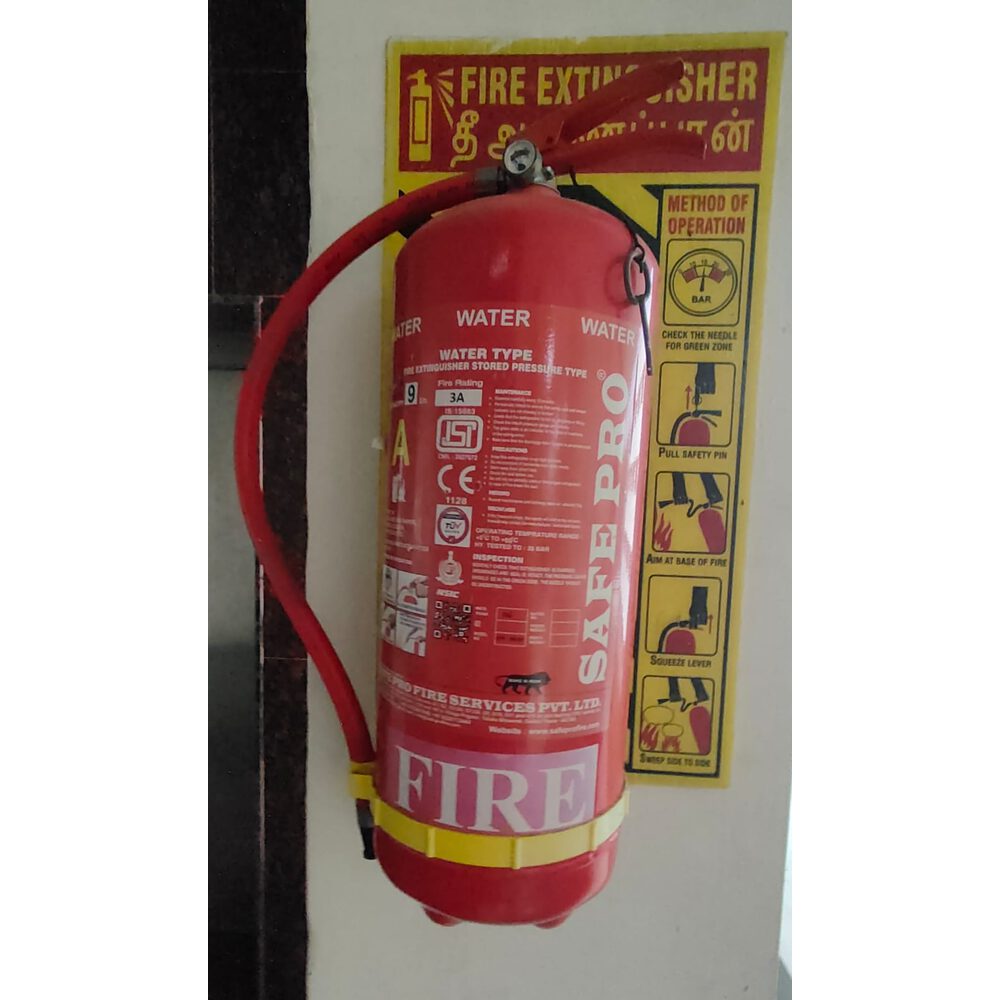
9 litre stored-pressure water fire extinguisher with gauge and hose for Class A fires in paper, wood, cloth and cartons. For garment floors, godowns, schools, offices and record rooms.
| Option | Price | Availability | SKU |
|---|---|---|---|
| 9 Litre | ৳2,900 | In stock | FSB-FE-WATER-9L-9-LITRE |
Delivery across Bangladesh. Cash on delivery available.
Delivery:
- Inside Dhaka: ৳60, about 2 days
- Outside Dhaka: ৳120, about 5 days
Payment methods: Cash on delivery, bKash, Credit / debit card, Cards, mobile banking and internet banking (SSLCommerz)
Specifications
- Product code
- FSB-FE-WATER-9L
- Type
- Fire extinguisher
- Fire class
- Class A
- Extinguishing agent
- Water
- Suitable for
- Class A solids — paper, wood, cloth, cartons
- Not suitable for
- Live electrical equipment, Class B liquids, Class C gases, cooking oil (Class F), burning metals (Class D)
- Capacity
- 9 litres
- Type
- Stored pressure (air or nitrogen), with pressure gauge
- Cylinder
- Welded steel with internal anti-corrosion coating, red finish
- Discharge
- Squeeze-grip valve, safety pin, hose with jet nozzle
- Discharge range
- Approximately 6 m
- Discharge time
- Approximately 60 seconds
- Full weight
- Approximately 14 kg
- Refillable
- Yes
- Application
- Office, Industrial, Warehouse
- Agent Type
- Water
Description
A water fire extinguisher sprays a jet of plain water that cools burning material below the temperature at which it can keep burning. It is made for one job — Class A fires in ordinary solids such as paper, wood, cloth, jute and cartons — and for those fires it works very well, because water soaks in and stops the material from smouldering and re-igniting.
What is a water fire extinguisher used for?
Use it on burning:
- Paper, files, books and cartons
- Fabric, yarn, cotton and jute
- Wood, furniture and pallets
- Rubbish and packaging
Never use it on live electrical equipment (water conducts electricity), on petrol, diesel or other flammable liquids (the burning liquid floats and spreads), on cooking oil (it erupts violently) or on burning metals.
How does a stored-pressure water extinguisher work?
The cylinder holds 9 litres of water and is pressurised with air or nitrogen. A gauge on the valve shows the pressure. Pull the pin, squeeze the lever and the gas pushes the water up a tube and out through the hose as a solid jet that reaches several metres.
You may also see the older water CO2 type: it is not kept under pressure, and has a small CO2 cartridge inside that is pierced by striking a knob on the cap. The stored-pressure type described here is simpler to check, because the gauge shows at a glance whether it is ready.
Water or ABC powder for Class A fires?
| Water 9 litre | ABC dry powder | |
|---|---|---|
| Cooling of deep-seated fires | Very good — soaks in | Poor — material can re-ignite |
| Residue | Only water | Powder that must be cleaned |
| Electrical, liquid and gas fires | Not allowed | Suitable |
| Discharge time | About 1 minute | 10–20 seconds |
That is why fabric stores, garment floors, paper godowns and record rooms usually keep water extinguishers together with ABC powder or CO2 units.
How do you use it?
- Make sure no live electrical equipment is involved.
- Pull the safety pin and aim the hose at the base of the flames from 3–4 metres.
- Squeeze the lever and move the jet across the burning material.
- When the flames are out, pull the material apart and wet any glowing parts.
How do you maintain it?
Check the gauge every month and keep the hose clear. Have the unit serviced once a year and refilled after any use. Keep it out of direct sun and away from corrosive chemicals so the cylinder does not rust.
Applications
- Garment and textile floors, fabric and yarn stores
- Paper, carton and jute godowns
- Schools, colleges, libraries and record rooms
- Offices and hostels (away from electrical panels)
- Furniture and wood workshops
- Waste and packaging storage areas
Recommended usage
Mount on a wall bracket along corridors and near exits of areas with paper, fabric or wood, with the handle about 1 to 1.5 m above the floor. Always pair it with a CO2 or ABC dry powder extinguisher for electrical and flammable-liquid risks, and label it clearly so that it is not used on those fires.
Safety instructions
Only fight a fire that is small and when your escape route is clear; otherwise leave and call 999. Never use on live electrical equipment — risk of electric shock; switch off the mains first. Never use on burning petrol, diesel, oil, cooking oil or metals, as water spreads or violently reacts with these fires. Keep the jet moving and stay between the fire and your exit. Keep away from heat above 60 °C and do not use a cylinder that is rusted or dented.
Frequently asked questions
Which fires can a water fire extinguisher be used on?
A water extinguisher is for Class A fires only: paper, wood, cloth, cartons, jute and similar solid materials. It must not be used on electrical, flammable-liquid, gas, cooking-oil or metal fires.
Why can you not use a water extinguisher on an electrical fire?
Water conducts electricity, so the jet can carry current back to the person holding the extinguisher and cause a serious electric shock. Use a CO2 or dry powder extinguisher on live equipment, or switch the power off first.
What is the difference between water CO2 type and stored-pressure water extinguishers?
A stored-pressure unit is kept pressurised all the time and has a gauge, while a water CO2 type is unpressurised until you strike the plunger, which pierces a small CO2 cartridge inside. Both discharge plain water; the stored-pressure type is easier to inspect and operate.
Is a water extinguisher useful in a garment factory?
Yes, water is very effective on fabric, yarn, cartons and paper, which make up most of the fire load on cutting, sewing, finishing and store floors. It is kept alongside ABC powder and CO2 units, which cover the electrical panels, machines and chemical stores.
How heavy is a 9 litre water fire extinguisher?
A full 9 litre water extinguisher weighs about 14 kg — 9 kg of water plus the steel cylinder and valve. Mount it at a height where staff can lift it off the bracket without strain.