Car Tow Rope with Steel Hook
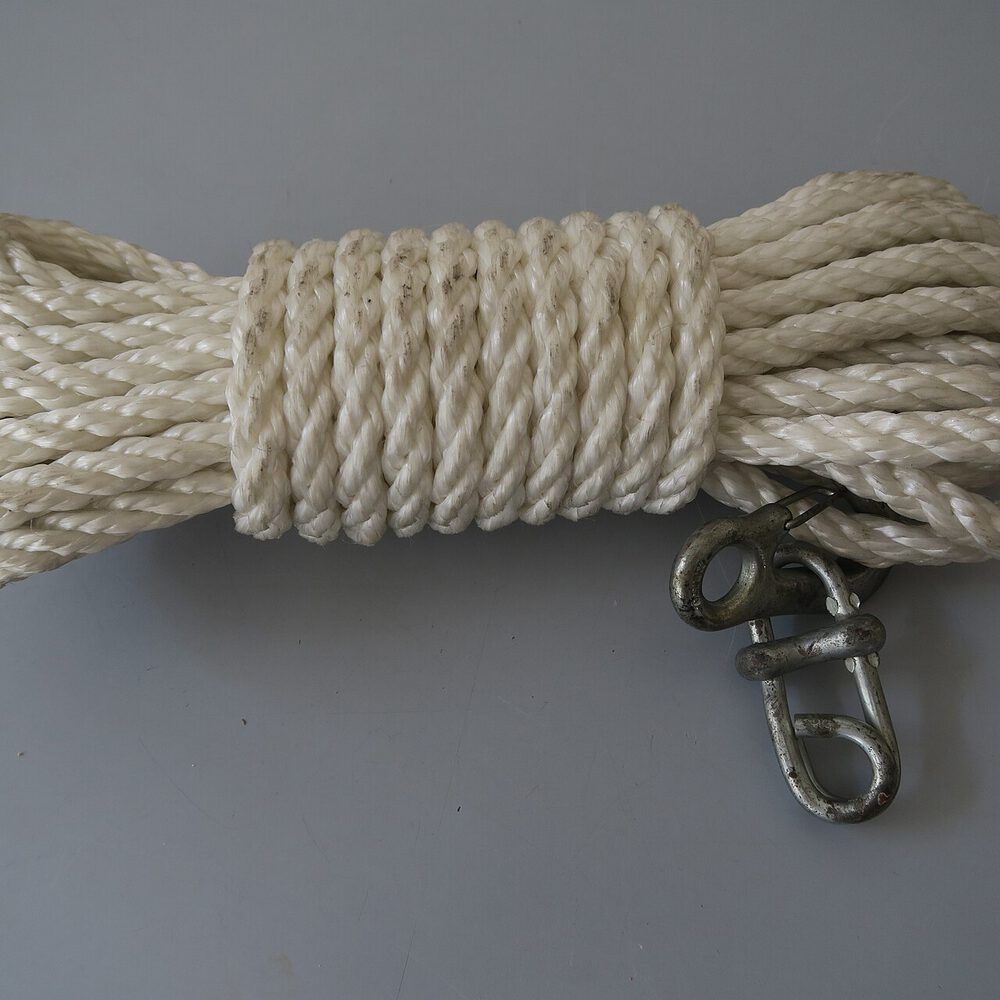
Twisted synthetic tow rope with steel snap hook for pulling a broken-down car to a workshop or off the road. Compact coil for the boot, in 4 m and 5 m lengths.
| Option | Price | Availability | SKU |
|---|---|---|---|
| 4 m | ৳550 | In stock | OVY-HV-TOW-4-M |
| 5 m | ৳700 | In stock | OVY-HV-TOW-5-M |
Delivery across Bangladesh. Cash on delivery available.
Delivery:
- Inside Dhaka: ৳60, about 2 days
- Outside Dhaka: ৳120, about 5 days
Payment methods: Cash on delivery, bKash, Credit / debit card, Cards, mobile banking and internet banking (SSLCommerz)
Specifications
- Product code
- OVY-HV-TOW
- Type
- Vehicle emergency tool
- Type
- Twisted (laid) synthetic fibre tow rope
- Colour
- White
- Lengths
- 4 m, 5 m
- End fitting
- Steel snap hook with spring latch
- Intended load
- Passenger cars and light vehicles — see the rated capacity on the tag
- Not for
- Lifting, or snatch recovery from mud or ditches
- Storage
- Dry, away from oil, acid and sunlight
- Application
- Car, Pickup, Microbus
- Size
- 4 m, 5 m
- Color
- White
Description
A tow rope is a strong synthetic rope with a steel hook, used to pull a car that cannot move under its own power — a dead engine, a failed clutch, an empty tank — behind another vehicle for a short distance. It coils into a small bundle that lives in the boot until the day it is needed.
When is a tow rope the right tool?
It is for a slow, short tow on a road: to the nearest workshop, a petrol pump or simply out of the traffic lane. It is not for dragging a vehicle out of deep mud or a ditch with a run-up — that sudden load can snap a rope and needs a proper recovery strap and shackles.
How do you tow a car safely?
- Fix the rope only to the towing eye or tow hook of each vehicle — never to a bumper, axle, suspension arm or steering part. Many cars have a screw-in towing eye stored with the jack.
- Check that each hook's spring latch has closed.
- Tie a bright cloth to the middle of the rope so other road users see it.
- In the towed car: ignition on so the steering does not lock, gear in neutral, handbrake off. Remember that the brakes and steering are much heavier with the engine off.
- The towing driver moves off gently to take up the slack, drives slowly and signals early. The towed driver brakes lightly to keep the rope tight.
- Agree hand or horn signals before you start.
For automatic and four-wheel-drive vehicles, check the owner's manual first — many must not be towed far, or at all, with the driven wheels on the road.
Which length should you choose?
| Length | Notes |
|---|---|
| 4 m | Easier to keep taut in city traffic; suits small and medium cars |
| 5 m | More reaction distance between the vehicles on open roads |
What should you check when buying?
Look at the rated capacity on the tag and choose one comfortably above the loaded weight of your car. The rope should be evenly twisted with no cut strands, and the hook should have a working safety latch.
Care
Dry the rope before storing it, keep it away from oil, battery acid and sharp edges, and throw it away if any strand is cut or the rope has been shock-loaded.
Applications
- Towing a broken-down car to a workshop
- Moving a stalled vehicle out of traffic
- Private cars, microbuses and pickups
- Garage and workshop yards
- Rental and office vehicle fleets
- Boat trailers and light carts
Recommended usage
Hook the rope to the towing eyes of both vehicles, mark its centre with a bright cloth and take up the slack gently before moving. Keep speed low and the rope taut, with the towed driver braking lightly. Use it for short road tows only.
Safety instructions
Never attach the rope to a bumper, axle or steering component, and never jerk it tight with a run-up. Keep all bystanders well clear — a rope or hook that fails under load whips back with great force. Do not exceed the rated capacity on the tag and do not use a rope with cut strands, knots or a damaged hook.
Frequently asked questions
How do you tow a car with a rope?
Attach the rope to the towing eyes of both cars, take up the slack slowly and drive gently, with a driver in the towed car steering and braking lightly to keep the rope tight. Keep the towed car's ignition on so the steering lock stays off, and keep the distance short.
Where do you attach a tow rope on a car?
Attach it only to the towing eye or tow hook provided by the manufacturer. On many cars it is a screw-in eye kept with the spare-wheel tools, which fits a threaded socket behind a small cover in the bumper.
Can an automatic car be towed with a rope?
Only if the owner's manual allows it, and usually only slowly and for a short distance. Many automatic and four-wheel-drive cars can suffer gearbox damage when towed with the driven wheels on the road, so a flatbed carrier is the safer option.
What is the difference between a tow rope and a recovery strap?
A tow rope is for pulling a rolling vehicle steadily along a road, while a recovery strap is made to stretch and absorb the shock of pulling a stuck vehicle out of mud or sand. Using a tow rope for a snatch recovery can break it.