Mechanical Foam Fire Extinguisher 6 Litre
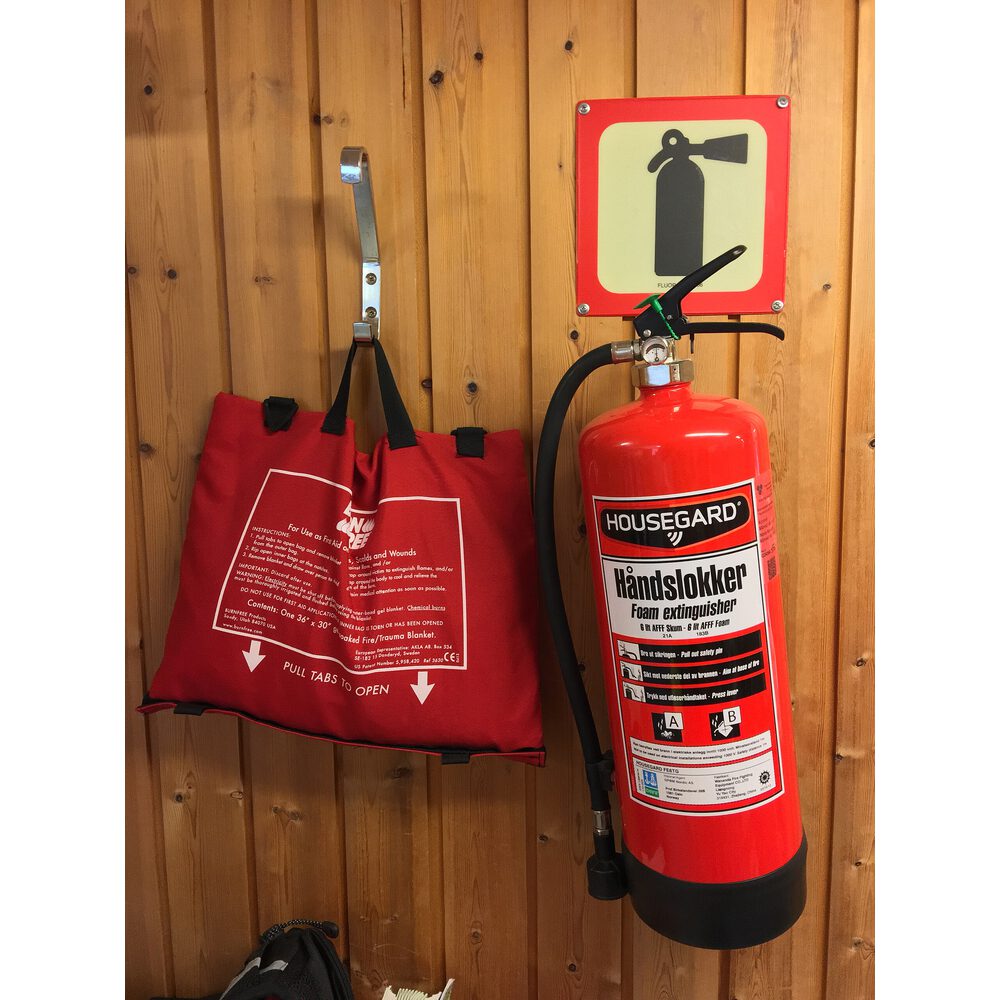
Compact 6 litre mechanical foam (AFFF) fire extinguisher with gauge and hose. Lighter than a 9 litre unit, for offices, schools, shops, restaurants and small workshops with Class A and B risks.
| Option | Price | Availability | SKU |
|---|---|---|---|
| 6 Litre | ৳2,500 | In stock | FSB-FE-FOAM-6L-6-LITRE |
Delivery across Bangladesh. Cash on delivery available.
Delivery:
- Inside Dhaka: ৳60, about 2 days
- Outside Dhaka: ৳120, about 5 days
Payment methods: Cash on delivery, bKash, Credit / debit card, Cards, mobile banking and internet banking (SSLCommerz)
Specifications
- Product code
- FSB-FE-FOAM-6L
- Type
- Fire extinguisher
- Fire class
- Class A, B
- Extinguishing agent
- Mechanical foam — AFFF concentrate premixed with water
- Suitable for
- Class A solids and Class B flammable liquids
- Not suitable for
- Class C gases, cooking oil (Class F), burning metals (Class D), live electrical equipment
- Capacity
- 6 litres
- Type
- Stored pressure, with pressure gauge
- Cylinder
- Welded steel with internal lining, red finish, plastic base
- Discharge
- Squeeze-grip valve, safety pin, hose and foam nozzle
- Discharge range
- Approximately 3–5 m
- Discharge time
- Approximately 25–40 seconds
- Full weight
- Approximately 10 kg
- Refillable
- Yes
- Application
- Workshop, Office, Commercial
- Agent Type
- Mechanical Foam (AFFF)
Description
A mechanical foam fire extinguisher holds a ready-mixed solution of water and foam concentrate, and turns it into foam at the nozzle by mixing in air as it is discharged. The 6 litre size weighs roughly a third less than a 9 litre unit, so it is easier to lift and handle — a practical choice for offices, schools, shops and small workshops.
What does "mechanical foam" mean?
Old foam extinguishers made their foam by a chemical reaction between two solutions when the cylinder was turned upside down. Modern units make foam mechanically: nitrogen or air pressure pushes the foam solution through a nozzle that draws in air and whips it into bubbles. The concentrate used is normally AFFF, so "mechanical foam" and "AFFF foam" extinguishers are the same family — you simply keep them upright and squeeze the lever.
What is it used for?
- Class A: paper, cartons, wood, cloth, upholstery and waste bins.
- Class B: petrol, diesel, kerosene, oils, paint and thinner.
It is not for flammable gas, cooking-oil in fryers, burning metals or live electrical equipment. Switch the power off before using it near electrical items, and only rely on any electrical clearance printed on the label of your unit.
6 litre or 9 litre?
| 6 litre | 9 litre | |
|---|---|---|
| Full weight | Approximately 10 kg | Approximately 14–15 kg |
| Discharge time | Approximately 25–40 seconds | Approximately 40–60 seconds |
| Best for | Offices, schools, clinics, shops, small workshops | Fuel stores, paint godowns, factories |
Choose 6 litres where the people likely to use it would struggle with a heavier cylinder, and 9 litres where the amount of flammable liquid is large.
How do you use it?
- Pull the safety pin.
- Stand 3–4 metres from the fire and squeeze the lever.
- On burning liquid, let the foam fall gently onto the surface or run down a wall behind it. On solids, aim at the base of the flames.
- Cover the whole burning area and watch for re-ignition.
How do you look after it?
Check the gauge monthly, keep the hose and nozzle clear of dust and insects, and get the extinguisher serviced once a year. Refill it after any use, however short.
Applications
- Offices, banks and showrooms
- Schools, coaching centres and clinics
- Shops, restaurants (dining and store areas) and hotels
- Small workshops, garages and motorcycle service centres
- Store rooms with paint, oil or packaging materials
Recommended usage
Mount on a wall bracket by the exit or in the corridor, with the handle about 1 to 1.5 m above the floor and a fire extinguisher sign above it. Use it upright. Pair it with a CO2 extinguisher wherever there are electrical panels or computer equipment.
Safety instructions
Only fight a fire that is small and when your escape route is clear; otherwise leave and call 999. Foam is water-based and conducts electricity: switch off the power first and do not spray live equipment unless the unit label allows it. Do not direct the jet into a pan of burning cooking oil or straight into a pool of burning fuel. Not for gas or metal fires. Rinse foam from skin and eyes with clean water. Keep away from heat above 60 °C and do not drop the cylinder.
Frequently asked questions
What is a mechanical foam fire extinguisher?
It is a foam extinguisher that makes its foam by mixing air into a foam solution at the nozzle, rather than by a chemical reaction inside the cylinder. Most stored-pressure foam extinguishers sold today are of this type and use AFFF concentrate.
Is a 6 litre foam extinguisher enough for an office?
Yes, a 6 litre foam unit is a common choice for an office floor, because the risk is mostly paper, furniture and small amounts of flammable liquid. Add a CO2 extinguisher near the electrical panel and server or printer area.
Can a foam extinguisher be used in a kitchen?
Not on burning cooking oil. A standard foam extinguisher is not made for deep-fat fryer fires, where a wet chemical extinguisher or a fire blanket is the right tool. Foam is fine for the dining area, store room and waste area of a restaurant.
Does a foam extinguisher leave a mess?
It leaves wet foam, which is much easier to clean than dry powder. The foam breaks down into a soapy liquid that can be mopped or wiped up, though it should be kept out of open drains and ponds.