AFFF Foam Fire Extinguisher 9 Litre
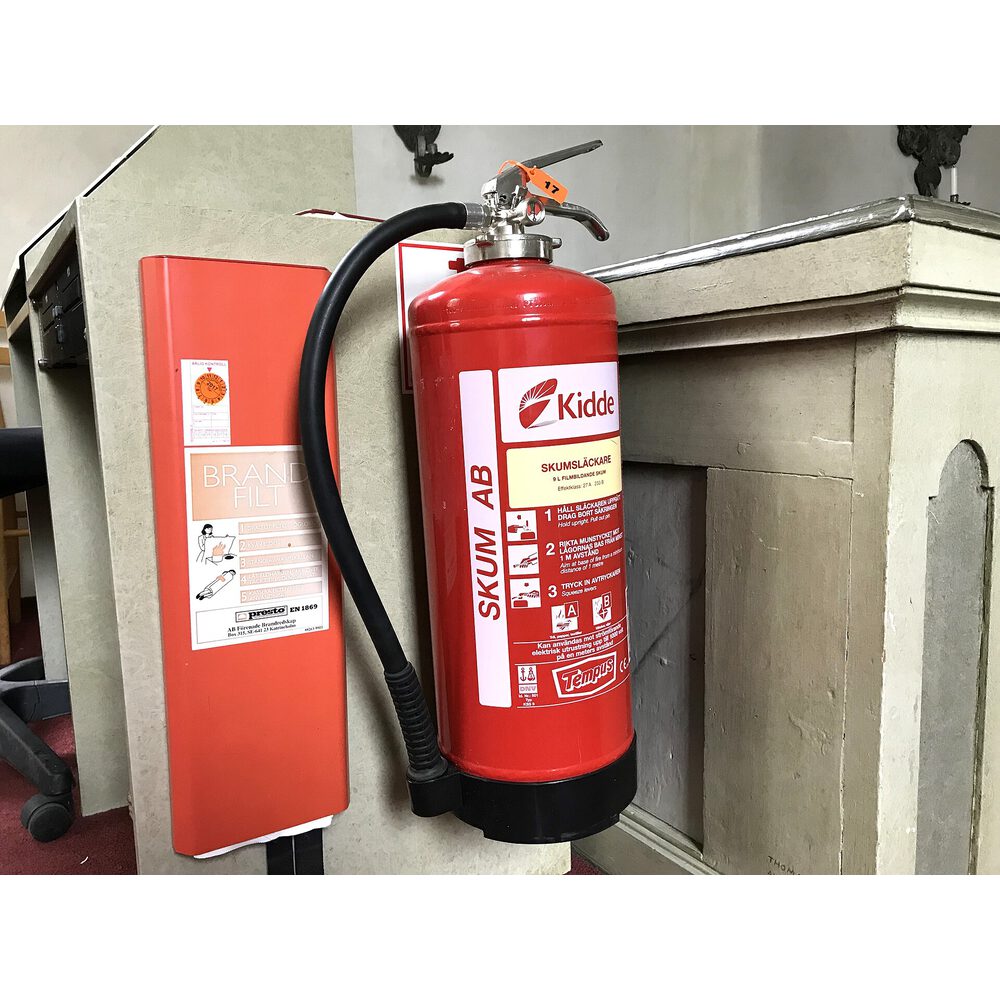
9 litre AFFF foam fire extinguisher with pressure gauge and hose for flammable-liquid and solid fires. Used at fuel stores, paint and chemical godowns, workshops and generator areas.
| Option | Price | Availability | SKU |
|---|---|---|---|
| 9 Litre | ৳3,000 | In stock | FSB-FE-FOAM-9L-9-LITRE |
Delivery across Bangladesh. Cash on delivery available.
Delivery:
- Inside Dhaka: ৳60, about 2 days
- Outside Dhaka: ৳120, about 5 days
Payment methods: Cash on delivery, bKash, Credit / debit card, Cards, mobile banking and internet banking (SSLCommerz)
Specifications
- Product code
- FSB-FE-FOAM-9L
- Type
- Fire extinguisher
- Fire class
- Class A, B
- Extinguishing agent
- AFFF (aqueous film-forming foam) premixed with water
- Suitable for
- Class A solids and Class B flammable liquids
- Not suitable for
- Class C gases, cooking oil (Class F), burning metals (Class D), live electrical equipment, alcohols and other water-mixing solvents
- Capacity
- 9 litres
- Type
- Stored pressure, with pressure gauge
- Cylinder
- Welded steel with internal lining, red finish
- Discharge
- Squeeze-grip valve, safety pin, hose and foam nozzle
- Discharge range
- Approximately 4–6 m
- Discharge time
- Approximately 40–60 seconds
- Full weight
- Approximately 14–15 kg
- Refillable
- Yes
- Agent Type
- AFFF Foam
- Application
- Workshop, Fuel Station, Industrial
Description
An AFFF foam fire extinguisher sprays a water-based foam that spreads over a burning liquid, seals in its vapours and cools the surface so that the fire cannot flare up again. AFFF stands for aqueous film-forming foam. The 9 litre size is the standard choice in Bangladesh for places that store or handle petrol, diesel, oils, paints and solvents.
What is a foam fire extinguisher used for?
- Class B — flammable liquids: petrol, diesel, kerosene, furnace oil, lubricants, paint and thinner. The foam floats on the liquid and forms a blanket that keeps air out.
- Class A — solids: paper, wood, cloth, cartons and rubber. The water in the foam soaks in and cools them.
It is not for flammable gas fires, cooking-oil fires in fryers or burning metals. Standard AFFF also breaks down on alcohols and other water-mixing solvents such as acetone — those need an alcohol-resistant foam.
Can foam be used on electrical equipment?
Foam is mostly water, so treat it as conductive. Switch the power off first. Only use the extinguisher near live equipment if its own label states that it has passed a dielectric test, and then keep the distance the label gives — usually at least 1 metre.
Foam, powder or CO2 — which should you choose?
| Extinguisher | Strong point | Weak point |
|---|---|---|
| AFFF foam | Seals liquid fires so they do not re-ignite; cools solids; easy to clean up | Not for gas or live electrical fires |
| ABC dry powder | Covers solids, liquids, gases and electrical | No cooling, poor visibility, messy residue |
| CO2 | No residue, safe on live electrical | Short range, liquid fires can re-ignite |
For a diesel tank, paint store or oil godown, foam is normally placed alongside ABC powder units.
How do you use it?
- Pull the safety pin and stand 3–4 metres back.
- For a liquid in a tray or drum, aim the foam at the inside wall or just in front of the fire so that it flows gently across the surface — do not blast it straight into the liquid, which can splash burning fuel.
- For burning solids, aim at the base of the flames and move across.
- Keep going until the whole surface is covered.
How do you maintain it?
Check the gauge every month (needle in green), keep the nozzle clear and have the unit serviced yearly. Refill it after any use. Used foam solution should be collected and disposed of by the service provider rather than washed into drains or ponds.
Applications
- Diesel, petrol and furnace-oil storage areas
- Paint, thinner and chemical godowns
- Vehicle workshops, garages and service centres
- Generator rooms and boiler fuel areas
- Petrol pumps and oil depots
- Printing, packaging and plastics factories
Recommended usage
Mount on a wall bracket or stand near the flammable-liquid risk, on the way out, about 1 to 1.5 m above the floor. Lay the foam gently over the liquid surface until it is fully covered. Keep CO2 units at electrical panels and ABC powder units for gas risks.
Safety instructions
Only fight a fire that is small and when your escape route is clear; otherwise leave and call 999. Switch off the power before using foam near electrical equipment; do not spray live equipment unless the unit label permits it and you keep the stated distance. Do not aim the jet straight into burning liquid — it can splash. Not for gas, cooking-oil or metal fires, and not effective on alcohols unless the foam is alcohol-resistant. Avoid contact with eyes and wash foam off skin. Store away from heat above 60 °C.
Frequently asked questions
What type of fire is a foam extinguisher used for?
A foam extinguisher is used for Class B fires in flammable liquids such as petrol, diesel, oil and paint, and for Class A fires in solids such as paper, wood and cloth. It is not for gas, cooking-oil, metal or live electrical fires.
What does AFFF mean?
AFFF means aqueous film-forming foam. The foam solution spreads a thin water film over a burning fuel surface under the foam blanket, which seals in the flammable vapours and helps stop the fire from re-igniting.
Can a foam extinguisher be used on a diesel generator fire?
Foam is a good choice for spilled or leaking diesel around a generator, but the generator must be shut down first because foam conducts electricity. For the alternator and control panel, keep a CO2 extinguisher in the same room.
Why is foam better than water on a petrol fire?
Foam floats on petrol and smothers it, while plain water sinks below the fuel and can spread the burning liquid. That is why water extinguishers must never be used on flammable liquids and foam or powder is used instead.
How often does a foam extinguisher need refilling?
Refill it after any use and whenever the gauge drops out of the green zone. The foam solution also ages, so it is replaced at the interval the service provider or the label specifies, typically every few years, with a basic inspection every year.