Manual Call Point (Fire Alarm Call Point)
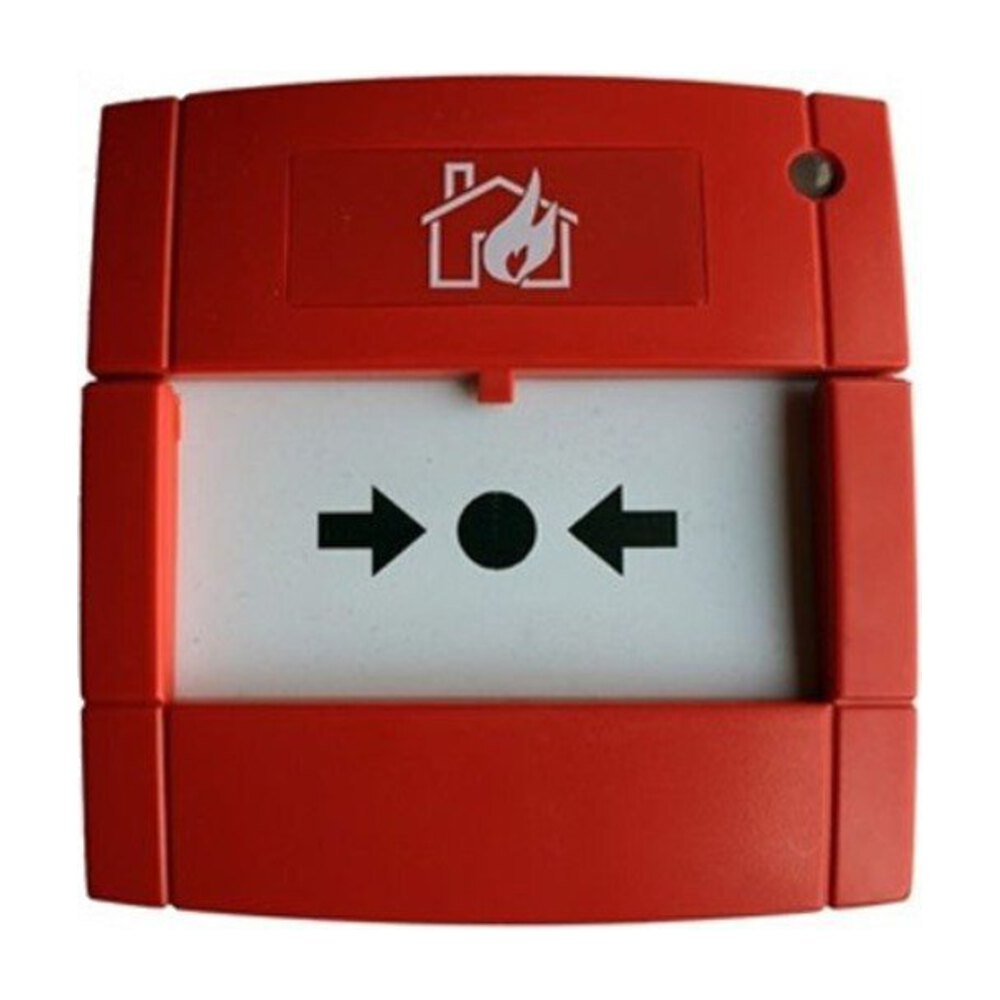
Red surface-mounted manual call point for conventional fire alarm systems. Press the centre of the white element to raise the alarm by hand — for exits, stair landings and corridors.
| Option | Price | Availability | SKU |
|---|---|---|---|
| 1 piece | ৳1,100 | In stock | OVY-FD-MCP-1-PIECE |
| Pack of 5 | ৳5,200 | In stock | OVY-FD-MCP-PACK-OF-5 |
Delivery across Bangladesh. Cash on delivery available.
Delivery:
- Inside Dhaka: ৳60, about 2 days
- Outside Dhaka: ৳120, about 5 days
Payment methods: Cash on delivery, bKash, Credit / debit card, Cards, mobile banking and internet banking (SSLCommerz)
Specifications
- Product code
- OVY-FD-MCP
- Type
- Manual call point
- Type
- Manual call point, single action (press the element)
- System
- Conventional fire alarm panels
- Colour
- Red with white operating element
- Marking
- White burning-house symbol on the housing; arrows and centre dot on the element
- Circuit
- 24 V DC zone circuit, two-wire
- Housing
- Flame-retardant plastic, surface back box
- Mounting height
- About 1.4 m above floor level
- Environment
- Indoor
- Testing
- With test key, without breaking the element
- Color
- Red
- Application
- Office, Industrial, Residential building
Description
A manual call point is the red box on the wall that lets anyone who sees a fire raise the alarm by hand, without waiting for a detector to operate. Pressing the white element at the black dot, where the two arrows point, operates a switch inside and the fire alarm panel sounds the bells throughout the building. It is often called a break glass, MCP or fire alarm switch.
How does a manual call point work?
Behind the white front element is a spring-loaded switch held in the "normal" position by the element. When the element is pressed hard at the centre it breaks or drops, the switch is released and the zone circuit goes into alarm. The alarm stays on until the element is replaced or reset and the panel is reset by the responsible person. A test key lets the technician operate the call point for the weekly test without breaking anything.
Where should call points be installed?
- At every final exit door to the outside
- On every stair landing, at the storey exit
- Along corridors so that nobody has to travel far to reach one — BS 5839 gives a maximum of 45 m
- Near high-risk areas such as kitchens, generator rooms and chemical stores
Mount them about 1.4 m above the floor, on the escape-route side, in plain view and never hidden behind doors, racks or stored goods.
Break glass or resettable?
| Element | After operation | Suits |
|---|---|---|
| Frangible glass | Fit a new glass | Places where misuse is rare |
| Resettable plastic | Reset with the key, no spare part needed | Schools, markets, factories with frequent drills |
Both look alike from the front and are operated in the same way.
Buying and wiring notes
Call points for European-style systems are normally marked to EN 54-11. A conventional call point is wired in parallel on the zone circuit like a detector; many have a built-in alarm resistor, and its value must suit your control panel. For outdoor or wet locations choose a weatherproof model.
Applications
- Final exit doors and stair landings
- Factory floors, corridors and loading bays
- Office and commercial building lobbies
- Schools, hospitals and hotels
- Apartment building staircases and car parks
- Near kitchens, generator rooms and chemical stores
Recommended usage
Fix the call point on the wall at about 1.4 m above the floor beside each exit and on each stair landing, wire it to the zone circuit of the conventional panel and test it with the test key. Use a different call point for each weekly test so that all are checked in rotation, and keep spare elements and the key with the panel.
Safety instructions
Operate only in a real emergency or during an authorised test — a false alarm causes panic and unnecessary evacuation. Never block, cover or paint a call point. Replace or reset the element immediately after use; a call point left operated keeps the system in alarm. Isolate the zone before opening the unit for wiring.
Frequently asked questions
What is a manual call point in a fire alarm system?
A manual call point is a red wall-mounted switch that people press to raise the fire alarm by hand. It is wired to the fire alarm control panel, and operating it sounds the bells and sounders in the building just as a detector would.
At what height should a manual call point be installed?
A manual call point is normally installed about 1.4 metres above the finished floor, as recommended in BS 5839. It should be on the escape route, clearly visible and easy to reach, including for someone in a wheelchair.
How do you reset a manual call point after it has been pressed?
Open or unlock the call point with its key, fit a new glass or snap the resettable element back into place, close it and then reset the fire alarm panel. The panel cannot be reset while the call point is still in the operated position.
How many manual call points does a building need?
A building needs one at every final exit and on every stair landing, plus enough along corridors that no one travels more than about 45 metres to reach one. Large open floors such as garment production floors therefore need several, placed on the way to each exit.