Fire Hydrant Landing Valve (Oblique, Flanged)
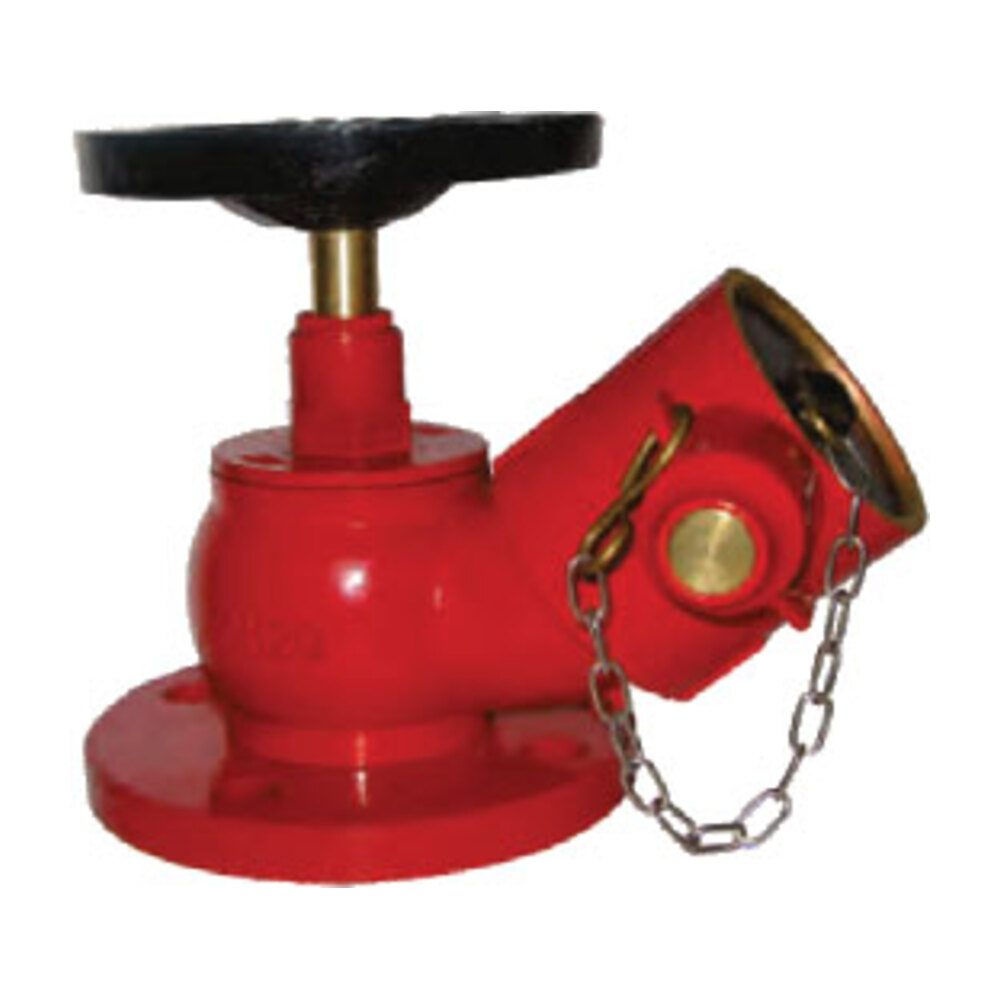
Red oblique-pattern landing valve for fire risers, with flanged inlet, black handwheel and an instantaneous female hose outlet closed by a cap on a chain. 2.5 inch (63 mm) and 1.5 inch sizes.
| Option | Price | Availability | SKU |
|---|---|---|---|
| 1.5 inch (38 mm) | ৳5,200 | In stock | FSB-FF-LANDING-VALVE-15-INCH-38-MM |
| 2.5 inch (63 mm) | ৳7,500 | In stock | FSB-FF-LANDING-VALVE-25-INCH-63-MM |
Delivery across Bangladesh. Cash on delivery available.
Delivery:
- Inside Dhaka: ৳60, about 2 days
- Outside Dhaka: ৳120, about 5 days
Payment methods: Cash on delivery, bKash, Credit / debit card, Cards, mobile banking and internet banking (SSLCommerz)
Specifications
- Product code
- FSB-FF-LANDING-VALVE
- Type
- Hydrant valve
- Type
- Oblique-pattern landing valve (hydrant valve), single outlet
- Available sizes
- 1.5 inch (38 mm), 2.5 inch (63 mm)
- Body
- Cast metal, red painted
- Spindle and outlet trim
- Brass
- Handwheel
- Metal, black
- Inlet
- Round flange, bolted to the riser branch
- Outlet
- Instantaneous female hose outlet with blank cap and chain
- Opening
- Handwheel, anticlockwise to open
- System
- Wet riser, dry riser or hydrant ring main
- Application
- Hydrant system, Industrial
- Color
- Red
- Size
- 2.5 inch (63 mm), 1.5 inch (38 mm)
Description
A landing valve is the hand-operated valve on a building's fire riser where a fire hose is connected. One is fitted at each floor landing or hydrant point, so fire fighters can take water on the floor they are working on instead of running hose up the stairs. This is an oblique-pattern valve painted red: it bolts to the riser branch by a round flange, is opened with the black handwheel on top, and delivers water through an angled instantaneous female outlet that is closed by a cap on a chain when not in use.
What is a landing valve used for?
- Connecting lay-flat fire hose to a wet or dry riser inside a building.
- Feeding the hose kept in a hose box in a stairwell, lobby or corridor.
- Giving the Fire Service and the site fire team a pressurised outlet on every floor and at yard hydrant points.
How is it built?
- Flanged inlet — a round flange with bolt holes that is bolted, with a gasket, to a matching flange on the riser branch.
- Body and handwheel — a globe-type body with a rising brass spindle; turning the black handwheel lifts the valve disc off its seat.
- Oblique outlet — the outlet leaves the body at an angle so the hose runs away from the valve without a sharp kink.
- Instantaneous female outlet — a spring-loaded lug locks the male coupling of the hose when it is pushed in. A blank cap on a chain keeps dirt out.
Which size do you need?
| Size | Typical use |
|---|---|
| 2.5 inch (63 mm) | The usual landing valve on hydrant risers in Bangladesh, used with 63 mm hose |
| 1.5 inch (38 mm) | Smaller-bore hose points fed by 38 mm hose |
The outlet must match the coupling of the hose kept beside it, and the inlet flange must match the flange on the riser branch — check the flange size and bolt-hole pattern with your installer before ordering. When buying, note that landing valves for hydrant risers are normally made to the BS 5041 pattern with a BS 336 instantaneous outlet; ask for the test record your fire consultant requires.
What about pressure-reducing landing valves?
On the lower floors of a tall building the riser pressure can be too high for a hand-held hose. There, a pressure-reducing landing valve is used, which limits the outlet pressure. On low and medium-rise buildings with moderate pressure a standard landing valve like this one is enough. The riser design decides which type goes on which floor.
How do you operate it?
- Release the lug, pull out the cap and let it hang on its chain.
- Push the male coupling of the hose into the outlet until it locks, and run the hose out fully.
- Turn the handwheel anticlockwise, slowly, until the valve is open.
- After use, close the valve by turning clockwise, release and drain the hose and refit the cap.
Maintenance
Keep the cap in place to protect the outlet seal and lug from dirt and damage. At regular intervals check that the handwheel is present and turns, that the lug springs back freely, and that there is no leak at the gland, the flange or the outlet. Valves that are never moved can seize, so operate each one during the periodic test of the riser.
Applications
- Wet and dry risers in high-rise buildings
- Stairwell and lobby hydrant points on each floor
- Fire hose boxes beside riser outlets
- Factory and warehouse internal hydrant points
- Yard hydrant posts and roof-top test outlets
Recommended usage
Bolt the valve to the flanged riser branch at each floor landing, at a height that can be reached from the floor, with room to turn the handwheel and push in a hose coupling. Have it installed and pressure-tested by a qualified fire protection contractor, keep the cap fitted, and keep a hose with a matching 63 mm or 38 mm instantaneous male coupling beside it.
Safety instructions
Make sure the hose coupling has locked in the outlet and someone is holding the nozzle before the valve is opened, and open it slowly. Never release the cap or a hose while the valve is open or passing water. Do not force a seized handwheel with a lever, and do not alter the setting of a pressure-reducing valve unless you are qualified to do so.
Frequently asked questions
What is a landing valve in a fire fighting system?
A landing valve is the valve on a fire riser where a fire hose is connected on each floor. It is normally kept closed with a cap on its outlet and is opened by a handwheel once the hose has been attached.
What size of landing valve is used in Bangladesh?
Most hydrant risers in Bangladesh use a 2.5 inch (63 mm) landing valve with an instantaneous female outlet. It takes the male coupling of a 63 mm fire hose, which is also the size the Fire Service commonly uses, so valve, hose and nozzle should all be bought in the same size and coupling pattern.
What is the difference between a landing valve and a hydrant valve?
They are the same kind of valve used in different places. It is called a landing valve when it is fitted on a riser at a floor landing inside a building, and a hydrant valve when it is fitted on an external hydrant post in a yard.
What is the difference between a wet riser and a dry riser?
A wet riser is always full of water under pressure from a pump or tank, while a dry riser is empty until the fire brigade pumps water into it through a breeching inlet at ground level. Landing valves are fitted at each floor on both types.
When is a pressure-reducing landing valve needed?
A pressure-reducing landing valve is needed on floors where the riser pressure is higher than a hand-held hose can safely take, usually the lower floors of a tall building. It limits the pressure at the outlet so the hose crew can control the nozzle.