2-Way Breeching Inlet (Fire Brigade Inlet)
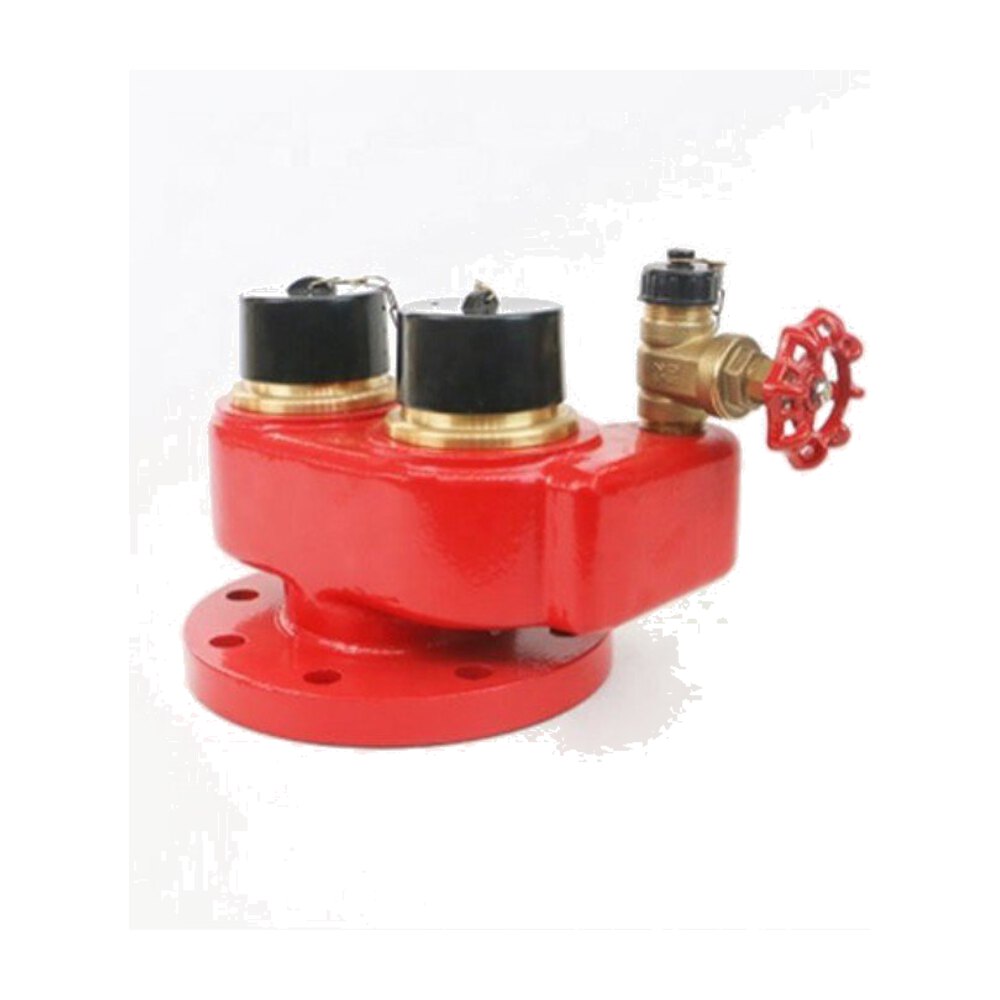
Red 2-way breeching inlet with two capped 2.5 inch (63 mm) instantaneous male inlets, flanged outlet and a drain valve. Lets Fire Service pumps feed water into a building riser or hydrant main.
| Option | Price | Availability | SKU |
|---|---|---|---|
| 2-way, 4 inch (100 mm) flange | ৳16,000 | In stock | FSB-FF-FDC-2WAY-2-WAY-4-INCH-100-MM-FLANGE |
| 2-way, 6 inch (150 mm) flange | ৳21,000 | In stock | FSB-FF-FDC-2WAY-2-WAY-6-INCH-150-MM-FLANGE |
Delivery across Bangladesh. Cash on delivery available.
Delivery:
- Inside Dhaka: ৳60, about 2 days
- Outside Dhaka: ৳120, about 5 days
Payment methods: Cash on delivery, bKash, Credit / debit card, Cards, mobile banking and internet banking (SSLCommerz)
Specifications
- Product code
- FSB-FF-FDC-2WAY
- Type
- Breeching inlet
- Type
- 2-way breeching inlet (fire brigade inlet)
- Available sizes
- 4 inch (100 mm) or 6 inch (150 mm) flanged outlet
- Body
- Cast metal, red painted
- Inlets
- Two × 2.5 inch (63 mm) instantaneous male inlets, brass
- Caps
- Black blank caps, each on a chain
- Outlet
- Round flange with bolt holes
- Drain
- Brass drain valve with red handwheel
- Mounting
- External wall, usually in an inlet box (box not included)
- System
- Dry riser, wet riser or hydrant main
- Size
- 6 inch (150 mm) flange, 4 inch (100 mm) flange
- Application
- Hydrant system, Industrial
- Color
- Red
Description
A breeching inlet, also called a fire brigade inlet, is the fitting on the outside of a building through which the Fire Service pumps water into the fire riser or hydrant main. This is the 2-way version: a red body with two 2.5 inch (63 mm) instantaneous male inlets side by side, each closed by a cap on a chain, a round flanged outlet that bolts to the riser pipe, and a small drain valve with a red handwheel on the side.
What is a breeching inlet for?
A dry riser has no water in it until the Fire Service fills it, and a building's own fire pump and tank can fail or run short during a large fire. The breeching inlet gives fire fighters a way in: a fire engine takes water from a hydrant, a reservoir or its own tank and pumps it through two hoses into the inlets, charging the riser so that the landing valves on every floor deliver water.
How is it built?
- Two male inlets — instantaneous male couplings that take the female end of a 63 mm delivery hose, pushed on until it locks. Two inlets let two hose lines feed the riser at once.
- Non-return valves — each inlet normally has its own spring-loaded non-return valve, so one line can be charged while the other inlet is still capped or unused.
- Caps and chains — keep rubbish, insects and nesting material out of the inlets; the chains stop the caps being lost.
- Flanged outlet — a round flange with bolt holes, bolted with a gasket to the flange of the riser or feed pipe.
- Drain valve — lets the water left in a dry riser be drained off after use or after a test.
Which size do you need?
| Variant | Typical use |
|---|---|
| 2-way, 4 inch (100 mm) flange | Risers and feed pipes of 100 mm — the usual choice |
| 2-way, 6 inch (150 mm) flange | Larger 150 mm mains where a 2-way inlet is specified |
Larger risers are often given a 4-way inlet instead; the riser design decides this. The inlets must be ones that Fire Service hoses can connect to — in Bangladesh that normally means 63 mm (2.5 inch) instantaneous couplings of the BS 336 pattern, with breeching inlets generally following the BS 5041 pattern. Confirm the requirement, and the flange size and bolt-hole pattern, with your fire consultant before ordering.
Where should it be installed?
On an external wall facing the road, where a fire engine can stop within easy hose reach, low enough for a fire fighter to couple hoses comfortably — British practice places the inlets roughly 400 to 600 mm above the ground. It is usually housed in a red steel box with a glazed door marked DRY RISER INLET or FIRE BRIGADE INLET; the box is not included. Keep it clearly visible and never blocked by parking, planting or shop displays.
Maintenance
Check regularly that both caps are in place and come off freely, that the inlets are clear of debris, that the drain valve is closed and that the box and its sign are intact and legible. Replace missing caps promptly, and have the inlet tested together with the riser.
Applications
- Dry and wet risers in high-rise residential and commercial buildings
- Garment factories and industrial buildings with hydrant systems
- Shopping malls, hospitals and hotels
- Warehouses with hydrant ring mains
- Car parks and basements served by a riser
Recommended usage
Mount on the road-facing external wall within easy hose reach of where a fire engine can park, normally inside a marked inlet box, and bolt the flanged outlet to the riser or feed pipe. Confirm the inlet coupling type with the local Fire Service or your fire consultant before installation — 63 mm instantaneous male is the usual requirement in Bangladesh — and label which riser the inlet serves.
Safety instructions
Keep both caps fitted and the drain valve closed at all times, and replace missing caps at once — debris in the inlets can block the system when it is needed. Never obstruct the inlet or lock its box in a way fire fighters cannot open. Installation and testing on fire mains must be carried out by a qualified fire protection contractor; do not use the inlet as a water outlet.
Frequently asked questions
What is a breeching inlet in a fire fighting system?
A breeching inlet is the fitting on the outside of a building where the Fire Service connects its hoses to pump water into the fire riser. Fire fighters push their delivery hoses onto the inlets, and the fire engine then charges the riser so that the landing valves on each floor have water.
What is the difference between a breeching inlet and a landing valve?
A breeching inlet takes water in, and a landing valve gives water out. The breeching inlet is at ground level outside the building and has male inlets for the fire engine's hoses, while landing valves are on each floor and have a female outlet for the hose used to fight the fire.
Should I choose a 2-way or a 4-way breeching inlet?
A 2-way breeching inlet is the usual choice for a 100 mm riser, and a 4-way inlet is used on larger 150 mm risers that need more water. The number of inlets is fixed by the riser design, so follow the drawing prepared by your fire consultant rather than choosing by building size alone.
Which hose coupling fits a breeching inlet in Bangladesh?
A breeching inlet in Bangladesh normally takes the female end of a 63 mm (2.5 inch) instantaneous hose coupling. The inlets themselves are instantaneous male couplings, so the hose is simply pushed on until its lugs lock; confirm the coupling with the local Fire Service before installation.
Why does a breeching inlet have caps and a drain valve?
The caps keep rubbish, stones and insects out of the inlets so that nothing blocks the pipe or jams the non-return valves when the Fire Service connects. The drain valve is there to empty the water left standing in a dry riser after it has been used or tested.