Carbon Monoxide (CO) Alarm with LCD Display
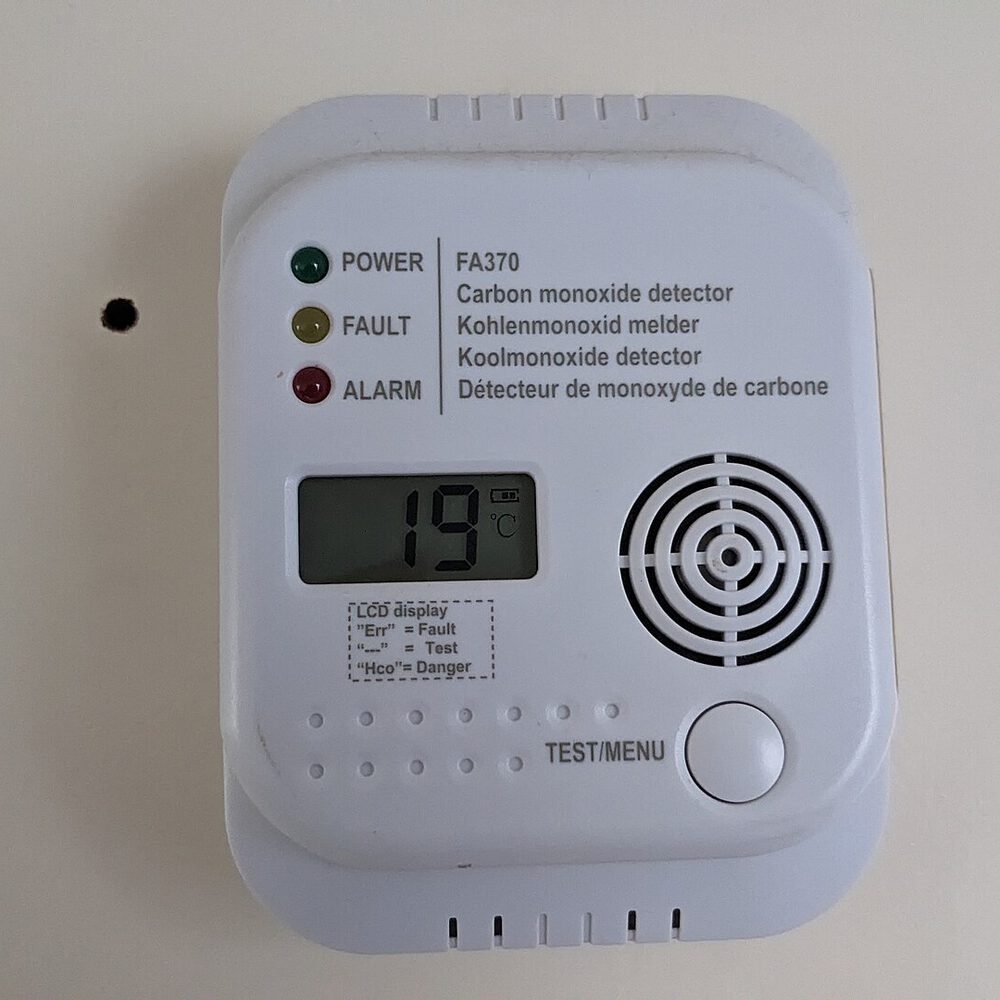
Battery-powered carbon monoxide (CO) alarm with LCD display, loud siren and test button for homes with gas geysers, generators, gas stoves or attached garages.
| Option | Price | Availability | SKU |
|---|---|---|---|
| Single unit | ৳1,800 | In stock | OVY-HV-COA-SINGLE-UNIT |
| Pack of 2 | ৳3,400 | In stock | OVY-HV-COA-PACK-OF-2 |
Delivery across Bangladesh. Cash on delivery available.
Delivery:
- Inside Dhaka: ৳60, about 2 days
- Outside Dhaka: ৳120, about 5 days
Payment methods: Cash on delivery, bKash, Credit / debit card, Cards, mobile banking and internet banking (SSLCommerz)
Specifications
- Product code
- OVY-HV-COA
- Type
- Carbon monoxide alarm
- Gas detected
- Carbon monoxide (CO) only
- Does not detect
- LPG, natural gas (methane), smoke
- Sensor type
- Electrochemical
- Housing
- White plastic, wall mounted
- Indicators
- Power, fault and alarm LEDs with LCD display
- Controls
- Single test / menu button
- Alarm sound
- Loud built-in siren, approximately 85 dB
- Power source
- Batteries (no wiring needed)
- Sensor life
- Typically 5–10 years; replace the unit by the date on the label
- Application
- Hotel, Generator Room, Home
- Color
- White
Description
A carbon monoxide alarm is a small wall-mounted device that sounds a loud siren when carbon monoxide (CO) builds up in a room. CO is a poisonous gas produced when gas, petrol, diesel, kerosene, charcoal or wood burns without enough air; it has no colour and no smell, so an alarm is the only way to know it is there.
Where does carbon monoxide come from in a home?
- Gas water heaters (geysers) fitted inside closed bathrooms
- Generators running in a garage, stairwell or veranda
- Gas stoves and ovens used in a kitchen with the windows shut
- Charcoal or wood fires burned indoors in winter
- A car engine left running in a closed garage
Early symptoms — headache, dizziness, nausea, drowsiness — are easy to mistake for tiredness, which is why people are overcome in their sleep or in the shower.
What does this alarm detect — and what does it not?
It detects carbon monoxide only, using an electrochemical sensor. It does not detect a leak of LPG cylinder gas or line (natural) gas, and it is not a smoke alarm. Those need their own detectors.
How does it warn you?
The alarm reacts to both the concentration and the time. Home CO alarms built to the European standard EN 50291 are designed to respond roughly as follows:
| CO level | Alarm sounds |
|---|---|
| About 50 ppm | After 60–90 minutes |
| About 100 ppm | After 10–40 minutes |
| About 300 ppm | Within 3 minutes |
The unit has power, fault and alarm indicator lights, an LCD screen and a single test button.
Where should you install it?
- In the room with the fuel-burning appliance: on the wall at about head height or higher, 1–3 metres from the appliance.
- In bedrooms and the corridor outside them: at breathing height.
- Not inside a steamy bathroom itself, not right next to a window, fan or cooker.
Press the test button once a month. The sensor has a limited life, typically 5 to 10 years — replace the whole alarm by the date printed on it.
Applications
- Bedrooms and corridors of flats with gas appliances
- Outside bathrooms fitted with gas geysers
- Kitchens with gas stoves and ovens
- Generator rooms and attached garages
- Hotels, hostels and guest houses
- Boiler rooms and small workshops
Recommended usage
Fit one alarm in every room that has a fuel-burning appliance and one near the bedrooms. Mount it at head height or higher, 1 to 3 m from the appliance, away from fans and windows. Test monthly and replace the batteries when the low-battery chirp starts.
Safety instructions
If the alarm sounds, open doors and windows, switch off the appliance if it is safe to do so, move everyone to fresh air and get medical help for anyone with a headache, dizziness or nausea. Do not go back in until the room has been aired. This alarm does not detect LPG or natural gas leaks or smoke, and it does not replace proper ventilation and servicing of gas appliances.
Frequently asked questions
Does a carbon monoxide alarm detect a gas cylinder leak?
No. A carbon monoxide alarm only detects CO, the poisonous gas made by incomplete burning. A leak of unburnt LPG or line gas needs a combustible gas (LPG / natural gas) detector, which uses a different sensor.
Do I need a CO alarm if I have a gas geyser?
Yes, a gas geyser is one of the most common causes of carbon monoxide poisoning at home, especially when it is fitted inside a closed bathroom. Fit the alarm just outside the bathroom or in the room the geyser vents into, and keep the bathroom ventilated.
Where should a carbon monoxide alarm be placed — high or low?
Place it at head height or higher on the wall. Carbon monoxide is about the same weight as air and mixes through the room, usually rising with warm air from the appliance, so it should not be put near the floor.
How long does a carbon monoxide alarm last?
Most carbon monoxide alarms last 5 to 10 years, because the electrochemical sensor slowly wears out. The replace-by date is printed on the unit; changing the batteries does not renew the sensor.
What should I do when the CO alarm goes off?
Get everyone into fresh air first, then open the doors and windows and turn off the gas appliance or generator if you can do it safely. Anyone who feels unwell should see a doctor, and the appliance should be checked before it is used again.