Traffic Safety Cone with Reflective Band
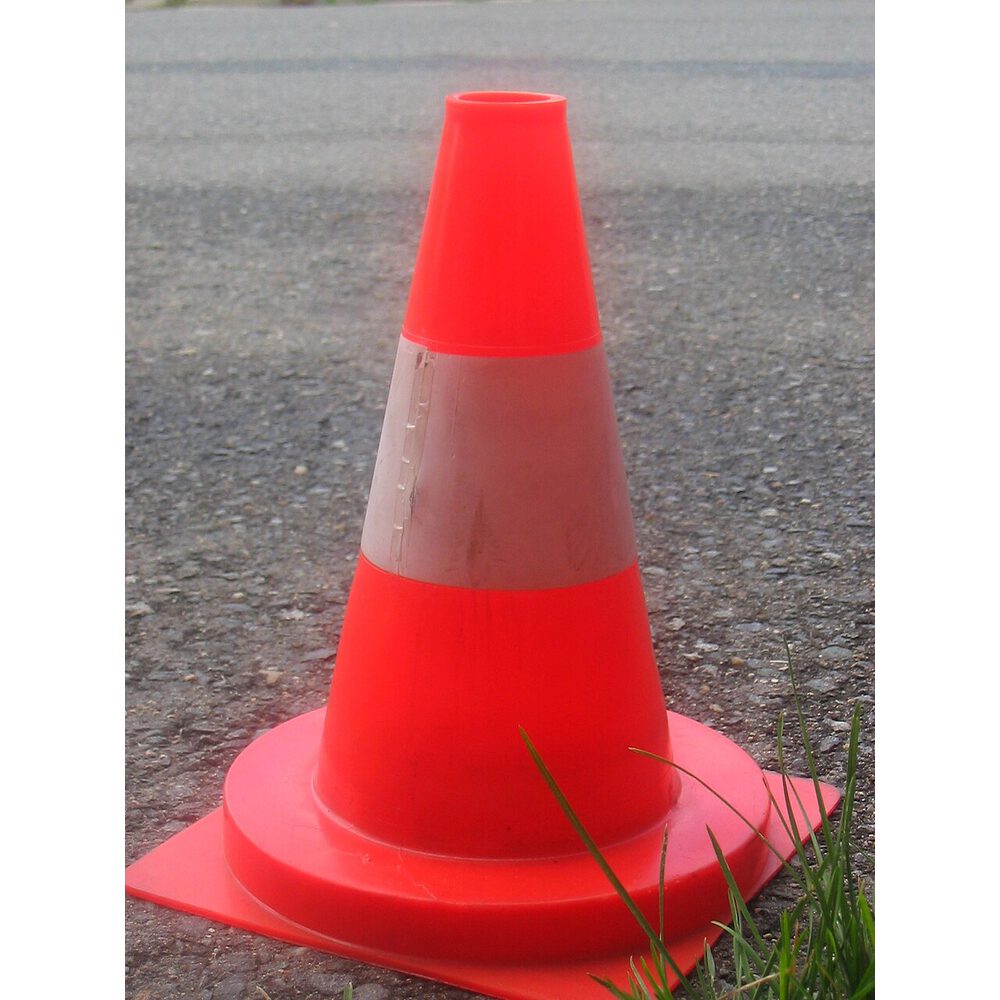
Orange PVC traffic safety cone with a reflective band and square base, in 300 mm, 450 mm and 750 mm heights for roads, car parks, factories and construction sites.
| Option | Price | Availability | SKU |
|---|---|---|---|
| 300 mm | ৳250 | In stock | FSB-WS-CONE-300-MM |
| 450 mm | ৳450 | In stock | FSB-WS-CONE-450-MM |
| 750 mm | ৳850 | In stock | FSB-WS-CONE-750-MM |
Delivery across Bangladesh. Cash on delivery available.
Delivery:
- Inside Dhaka: ৳60, about 2 days
- Outside Dhaka: ৳120, about 5 days
Payment methods: Cash on delivery, bKash, Credit / debit card, Cards, mobile banking and internet banking (SSLCommerz)
Specifications
- Product code
- FSB-WS-CONE
- Type
- Traffic cone
- Type
- One-piece traffic safety cone with square base
- Colour
- Fluorescent orange with grey-silver reflective band
- Available heights
- 300 mm, 450 mm, 750 mm
- Material
- Flexible PVC
- Reflective band
- One band (two on some 750 mm cones)
- Base
- Square, moulded in one piece with the cone
- Stackable
- Yes
- Indoor / outdoor
- Both
- Size
- 300 mm, 750 mm, 450 mm
- Color
- Orange
- Application
- Industrial, Road, Construction, Parking
Description
A traffic safety cone is a bright orange, flexible plastic cone that is placed on the ground to mark a hazard, close off a lane or guide vehicles and pedestrians around a work area. This cone is moulded in orange PVC with a square base and one grey-silver reflective band around the middle, so it is visible in daylight and reflects headlights at night.
What is a traffic cone used for?
- Marking road works, drain and cable excavations and broken-down vehicles
- Reserving or blocking parking spaces and guiding traffic in car parks
- Separating forklift routes and walkways inside factories and warehouses
- Marking a spill, an open manhole or a maintenance area for a short time
- Driving-school practice courses and sports training
Which size should you choose?
| Height | Typical use |
|---|---|
| 300 mm | Indoor floors, sports and driving practice, small car parks |
| 450 mm | Car parks, factory yards, petrol pumps, low-speed internal roads |
| 750 mm | Public roads, construction sites and anywhere vehicles approach at speed |
The faster the traffic, the taller the cone should be, because drivers need to see it from further away. On public roads use 750 mm cones and place them closer together on bends.
How do you set out cones?
- Start well before the hazard so drivers have time to react.
- Place the cones in a gradual diagonal line (a taper) to move traffic sideways, then in a straight line beside the work area.
- Keep the spacing even and close enough that a vehicle cannot pass between two cones.
- Collect the cones in reverse order when the work is finished.
Care
Wash off mud and dust so the orange body and the reflective band stay bright. Stack the cones one inside another for storage, out of direct sun when not in use, and replace a cone when the band has peeled off or the body has faded or cracked.
Applications
- Road works, utility excavations and lane closures
- Car parks, shopping malls and petrol pumps
- Factory yards, warehouses and forklift routes
- Construction site entrances and delivery areas
- Schools, hospitals and event traffic management
- Driving schools and sports training
Recommended usage
Use 750 mm cones on public roads and 450 mm cones in car parks and factory yards. Set the cones out in a taper before the hazard and then in a straight line alongside it, evenly spaced. At night or in rain make sure the reflective band faces the traffic and is clean.
Safety instructions
A cone only warns — it will not stop a vehicle, so never rely on cones alone to protect people working in a live traffic lane. Wear a reflective vest and face the oncoming traffic while placing or collecting cones. Replace cones that are faded, crushed or have lost their reflective band.
Frequently asked questions
Which size of traffic cone is used on roads in Bangladesh?
Cones of about 750 mm height are the usual choice for public roads and construction sites, because drivers can see them from a distance. The 450 mm size is meant for car parks, factory yards and other low-speed areas, and 300 mm cones are for indoor and training use.
Why does a traffic cone have a reflective band?
The reflective band sends the light of vehicle headlights back towards the driver, so the cone can be seen at night and in rain. A plain orange cone without a band is only suitable for daytime or well-lit indoor use.
Is a PVC traffic cone damaged if a car runs over it?
A flexible PVC cone normally bends under a wheel and returns to its shape, which is why PVC is preferred to hard plastic. Repeated crushing, heavy trucks and long exposure to sun will eventually crack or flatten any cone, and it should then be replaced.
How many traffic cones do I need?
Count the length you need to mark and divide it by the spacing: roughly one cone every 1 to 2 metres in a car park or factory, and every 3 metres or so along a straight road closure, plus extra cones for the taper at the start. Buying a few spare cones is sensible because cones get lost and damaged.
What colour should a safety cone be?
Orange (or orange-red) is the standard colour for traffic and construction cones because it stands out against roads, soil and buildings. Other colours such as yellow, blue or green are used indoors for housekeeping, sports or to mark different zones.