Conventional Heat Detector (Fixed Temperature / Rate of Rise)
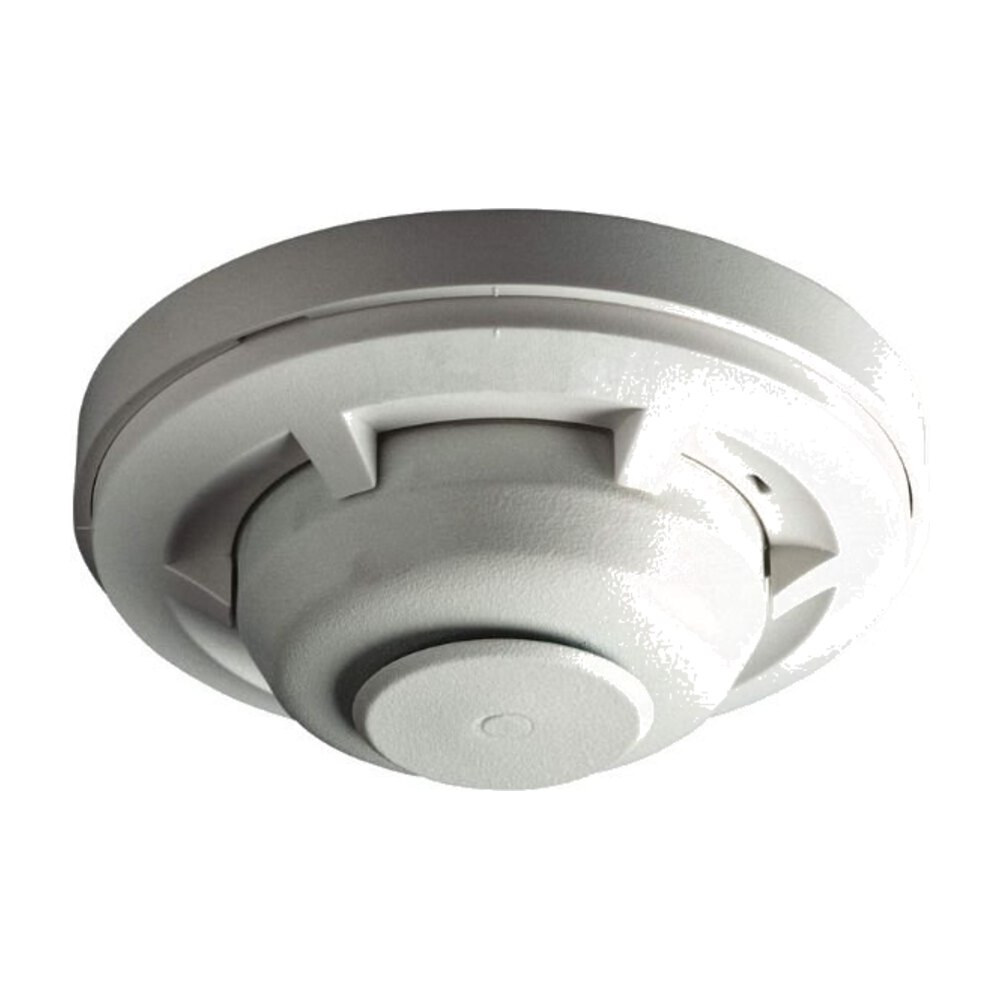
Ceiling-mounted conventional heat detector with base for fire alarm panels. Responds to heat — a rapid rise or a fixed temperature — not smoke, for kitchens, generator rooms, car parks and dusty areas.
| Option | Price | Availability | SKU |
|---|---|---|---|
| 1 piece with base | ৳1,200 | In stock | FSB-FD-HEAT-ROR-1-PIECE-WITH-BASE |
| Pack of 10 with bases | ৳11,500 | In stock | FSB-FD-HEAT-ROR-PACK-OF-10-WITH-BASES |
Delivery across Bangladesh. Cash on delivery available.
Delivery:
- Inside Dhaka: ৳60, about 2 days
- Outside Dhaka: ৳120, about 5 days
Payment methods: Cash on delivery, bKash, Credit / debit card, Cards, mobile banking and internet banking (SSLCommerz)
Specifications
- Product code
- FSB-FD-HEAT-ROR
- Type
- Heat detector
- Type
- Spot-type heat detector, fixed temperature and/or rate of rise (see the rating on the unit)
- System
- Conventional fire alarm panels
- Colour
- Grey-white head and base
- Sensing element
- At the centre of the head, behind the raised cap
- Typical response
- Rate of rise of around 8 °C per minute or faster; fixed-temperature point commonly about 57 °C
- Built-in sounder
- None
- Output
- Signals fire on the panel zone circuit; contact-type models may need a series resistor
- Wiring
- Two-wire, on a 24 V DC zone circuit
- Mounting
- Ceiling, head fitted to a base, indoor
- Application
- Kitchen, Industrial, Car park
Description
A heat detector is a fire detector that reacts to heat instead of smoke: it goes into alarm when the air at the ceiling heats up unusually fast or reaches a set temperature, as it does when a fire starts. It is the detector to use in places where smoke, steam, fumes or dust are part of normal work and would make a smoke detector give false alarms. This grey-white unit is the conventional type: the head fits a ceiling base and is wired to a conventional fire alarm control panel.
How does a heat detector work?
The heat-sensing element sits at the centre of the head, behind the raised cap, where the warm air rising from a fire reaches it first. A heat detector responds in one or both of two ways:
- Rate of rise — it alarms when the temperature climbs quickly, typically by around 8 °C per minute or more, whatever the starting temperature. The slow, normal warming from morning to afternoon is ignored.
- Fixed temperature — it alarms when the air at the detector reaches a set point, commonly about 57 °C.
A combined detector uses both, so a fast-growing fire is caught by the rate-of-rise response and a slowly developing one by the fixed limit. The type and temperature rating are printed on the detector label — check them before you install it.
Heat detector or smoke detector?
| Heat detector | Smoke detector | |
|---|---|---|
| Responds to | Fast temperature rise or a set temperature | Smoke particles |
| Speed of warning | Later — the fire must already give off heat | Earliest |
| False alarms from steam, dust, fumes | Very unlikely | Likely |
| Typical places | Kitchens, generator rooms, car parks, workshops | Offices, corridors, bedrooms, stores |
Because heat detectors respond later, do not use them to protect sleeping areas or escape routes on their own.
Rate-of-rise or fixed-temperature?
Rate-of-rise response is the faster of the two in ordinary rooms. Where the temperature normally jumps quickly — directly above ovens, beside boilers, near roller shutters that let in hot air — a detector that works on fixed temperature only, operating at a set temperature such as 57 °C or higher, is the better choice. Check the rating marked on the detector against the room it is going into.
Installation notes
- Fix it on the ceiling, not on a wall, and away from AC outlets and exhaust fans.
- Heat detectors cover a smaller area than smoke detectors: about a 5.3 m radius on a flat ceiling under BS 5839.
- Check that the detector suits your panel. Some heat detectors are simple contact-type (normally open) devices; with those, fit the series resistor the panel manual specifies, so that an operated detector is read as fire and not as a short-circuit fault.
Applications
- Commercial and canteen kitchens
- Generator rooms, boiler rooms and plant rooms
- Basement and multi-storey car parks
- Dusty production areas and workshops
- Laundries and ironing sections
- Loading bays and waste stores
Recommended usage
Use with a conventional fire alarm panel in areas where smoke detectors would false-alarm. Fix the base to the ceiling, wire the zone through it and check with the panel manual how the detector must be connected. Test each detector at least once a year with a heat-detector tester or a warm-air source — never with a naked flame.
Safety instructions
A heat detector warns later than a smoke detector and has no sounder of its own; it protects only when connected to a working fire alarm panel. Do not use it as the only detector in bedrooms or on escape routes. Do not paint the head or cover the sensing element at its centre — it must stay open to the air. Do not fit directly above ovens or beside heater outlets.
Frequently asked questions
Where should a heat detector be used instead of a smoke detector?
Use a heat detector wherever smoke, steam, exhaust fumes or dust are normally present — kitchens, canteens, generator and boiler rooms, car parks, laundries and dusty workshops. In those places a smoke detector would give frequent false alarms, while a heat detector reacts only to the heat of a real fire.
What is the difference between rate-of-rise and fixed-temperature heat detectors?
A rate-of-rise detector operates when the temperature climbs quickly, whatever the starting temperature, while a fixed-temperature detector operates only when the air reaches a set temperature such as 57 °C. Rate-of-rise responds sooner to a fast-growing fire; fixed-temperature is preferred where the temperature normally changes suddenly, such as above ovens.
Can a heat detector be used in a kitchen?
Yes, a heat detector is the normal choice for a kitchen because cooking smoke and steam do not set it off. Mount it on the ceiling away from the area directly above the stove or oven; if the heat there rises very suddenly during cooking, use a fixed-temperature type.
How much area does a heat detector cover?
A point heat detector covers a radius of about 5.3 m on a flat ceiling under BS 5839, which is less than a smoke detector. Other design codes use different spacing figures, and beams or high ceilings reduce the coverage, so follow the code your building is designed to.